
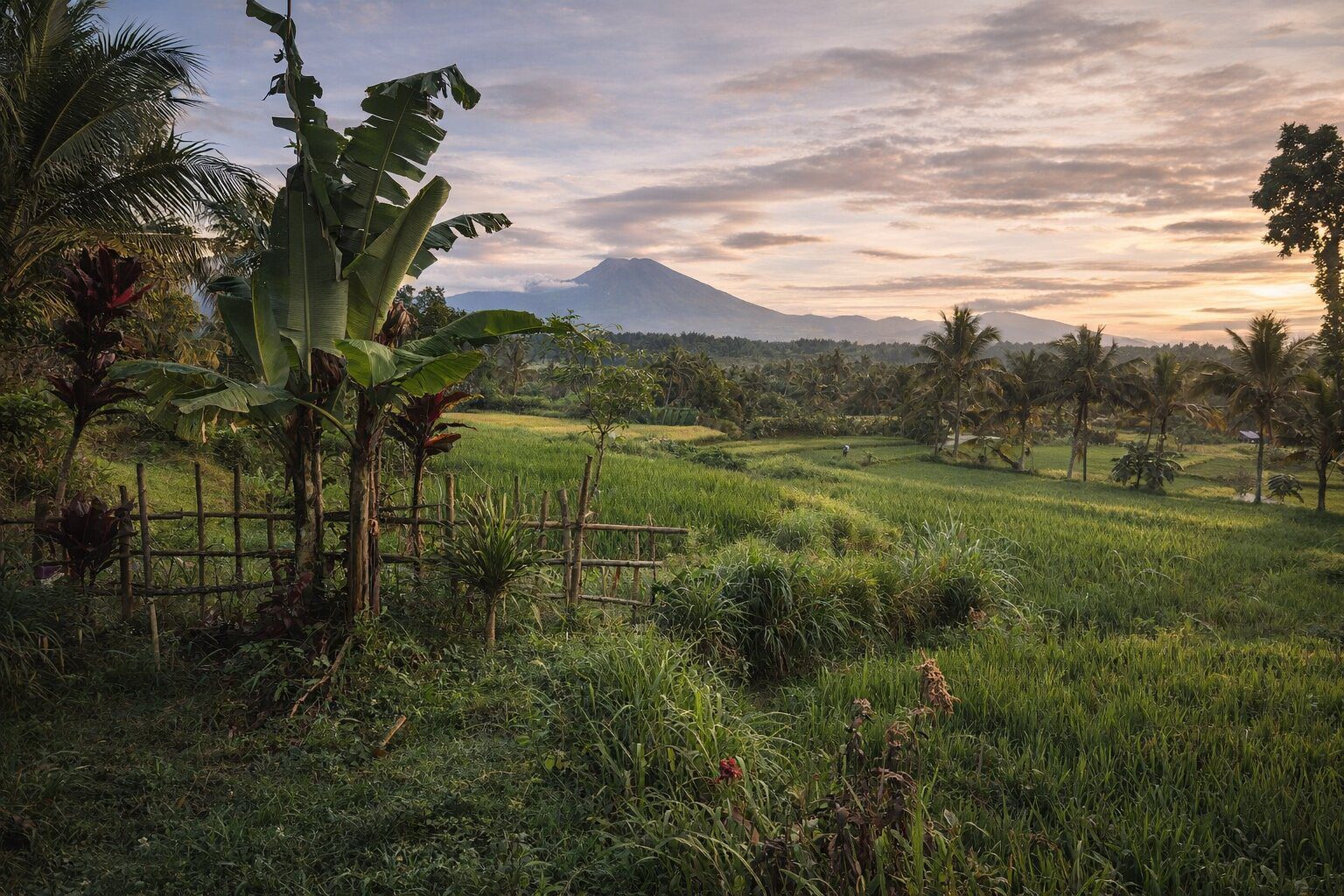
I hadn’t planned to stay two and a half weeks in the Tetebatu area.
At first, it was just a stop. A rural area at the foot of Rinjani, known for its terraced rice paddies and forest walks — not really a village in the dense sense of the word, more a scattered cluster of hamlets and places to stay, a few minutes from a small town. The kind of place you can, in a purely touristic mindset, pass through in a few days before hitting the road toward something else.
I ended up there almost by chance. And as is often the case with places, it isn’t the criteria that really decide. It’s the encounters.
I was staying in a small wooden bungalow, simple, clean, among gardens. Nature started right there, within reach, from the morning on.
Then I got sick. My first place to stay didn’t offer meals — so I’d eaten out, at a small local restaurant. A fairly serious bout of food poisoning followed. And that’s when, paradoxically, the region really started to exist for me.
FIND YOUR WAY
In this account
A host, a family, knowledge I never suspected
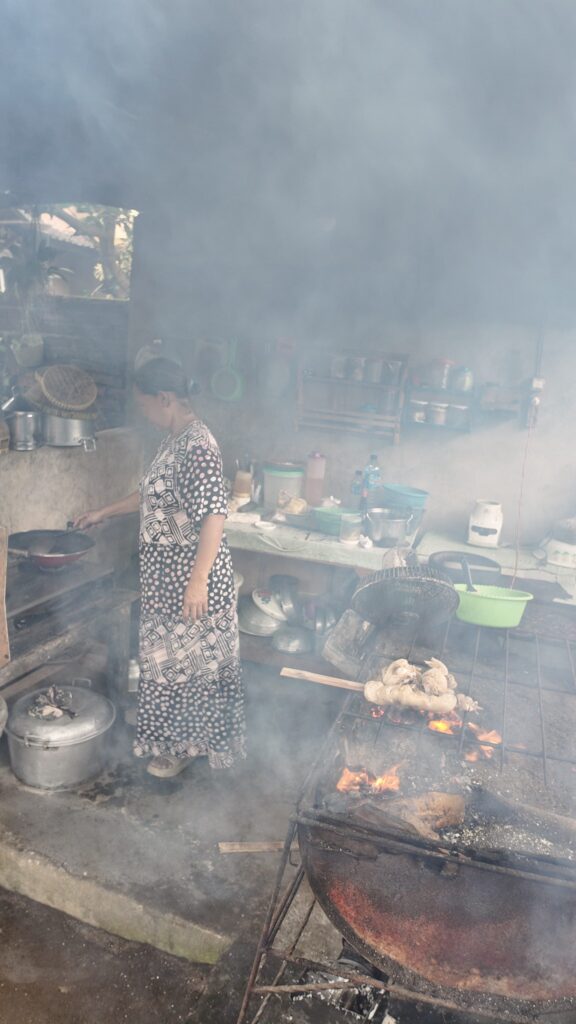
My host didn’t call a doctor. He didn’t need to.
He and his family are among those people who know their environment with a precision that’s hard to imagine from Europe. Knowledge passed down — not learned from a book, not acquired in training, but built in since childhood through everyday gestures, cooking, gathering, care. They know what grows around them, what it treats, how to prepare it, in what quantity.
With my curiosity helping, I asked a lot of questions. And they answered with a quiet generosity.
I was offered young guava leaves to chew several times a day. Since my stomach wasn’t ready for cooked dishes, I asked for boiled vegetables and broth. They brought from the garden — where things grow everywhere here — sweet potato, carrots, taro, cassava, boiled in water without any fat. Simple, very energizing food, exactly what was needed. Banana, white rice. Then, gradually, fresh vegetable curries in coconut milk, prepared on the spot. With every meal, I felt something settling back into place.
Within two days, the episode was over.
I kept asking questions — and started to grasp the extent of what they know. Not just for minor ailments. For much more serious conditions too — and it wasn’t theory: they cited specific cases, real situations that had happened to one person or another, with the plants used, the results obtained. Concrete, verified, passed down. What I learned in those few days is probably only a tiny fraction of their real knowledge. But it was enough to understand I was facing something rare: a family that still lives in a daily, practical, inherited relationship with its natural environment.
The forest as a classroom
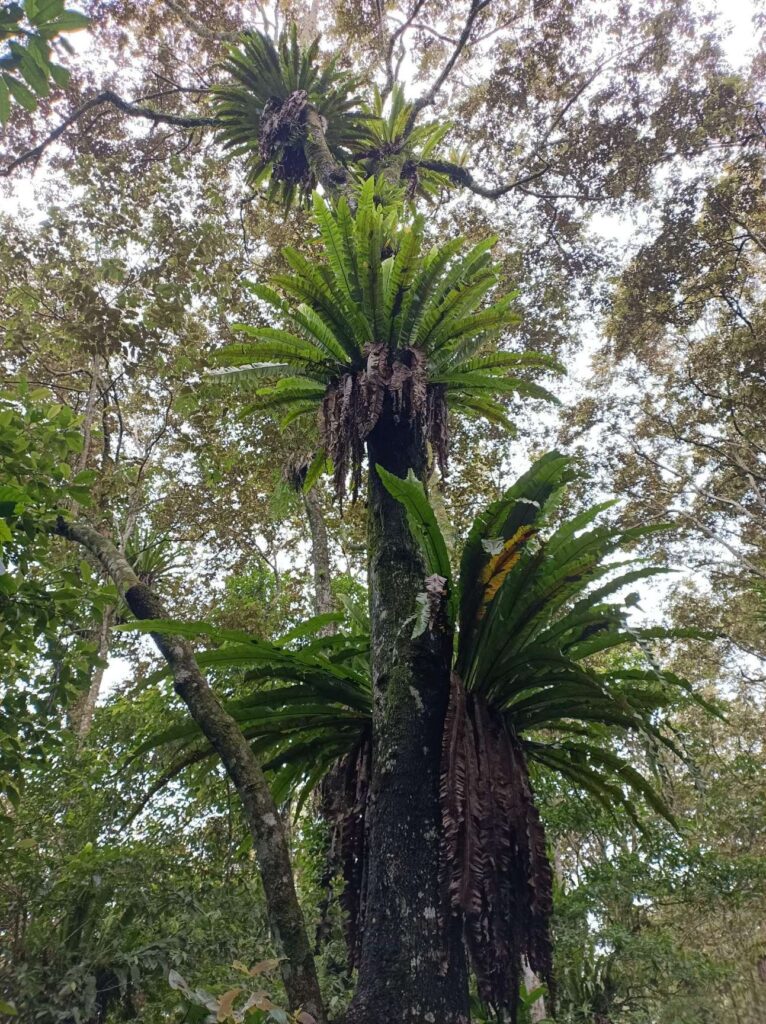
Once I was well enough to walk, the hikes resumed — but with a different eye.
The guide I walked the trails with around the national park had the same relationship with nature as my host family. For him, the forest isn’t a backdrop. It’s a familiar space, mapped out in his memory, filled with names, uses, distinctions. He stopped regularly — not so I could photograph something, but to show me: this plant is edible, this one heals, that one is toxic if you don’t know how to prepare it.
I went twice. The second time, we crossed paths with black monkeys in the forested area — a silent appearance, almost indifferent to our presence. The guide didn’t react as if it were extraordinary. To him, they were just part of the ordinary scenery.
What struck me was that this knowledge didn’t seem exceptional to him. He wasn’t showing off. It was simply what you know when you grow up here, when you’ve walked these paths since childhood. A basic literacy, like reading or counting.
The comparison draws itself. In Europe, our knowledge of the immediate environment — especially on the medicinal side — is fairly limited. And what’s striking in these equatorial regions is how generous nature is: warmth, water, sun, vegetation that grows with an abundance hard to imagine from our temperate winters. People here didn’t have to look far to learn how to live with their environment. It gave them a lot — and they learned to read it.
A day in the Tetebatu area
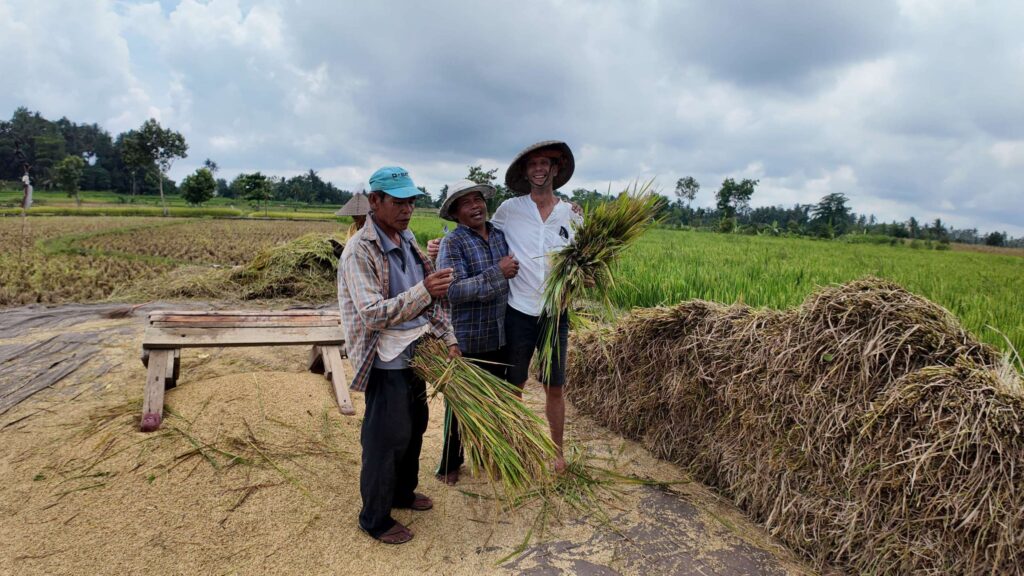
The area — Kotaraja included, a few kilometers further — doesn’t look like an organized tourist destination. It’s a scattered rural area, with places to stay tucked into the rice paddies, paths running alongside farmland and local activity, and daily life that carries on regardless of passing travelers. You can walk for a long time on small roads, run into people working, chat easily.
The days had no fixed schedule.
Some mornings: the market. Buying the ingredients for the meal with the family — not the tourist market, theirs. We’d come back together, prepare, cook with what we’d brought home. Other days: a walk through the rice paddies or the forest. You leave, you walk, you come back whenever you come back.
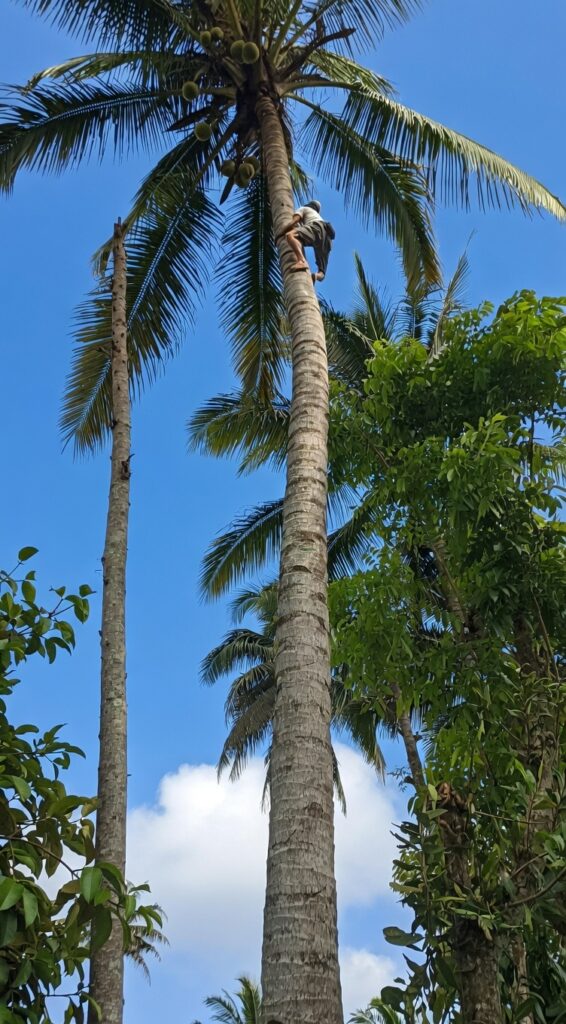
In the middle of the day, sometimes I’d join in on what the family was doing: making coconut oil, a manual process that takes patience; roasting coffee, grinding it, sometimes mixing it with toasted rice to soften the bitterness. These aren’t workshops set up for tourists. They’re ordinary tasks some families are willing to share, in exchange for a small contribution and joining in on buying the ingredients at the market that morning.
In the evening, conversations. With my host family, with other passing travelers who’d come with the same mindset — open, curious, not inclined to consume the experience in a rush.
Ecotourism that deserves the name
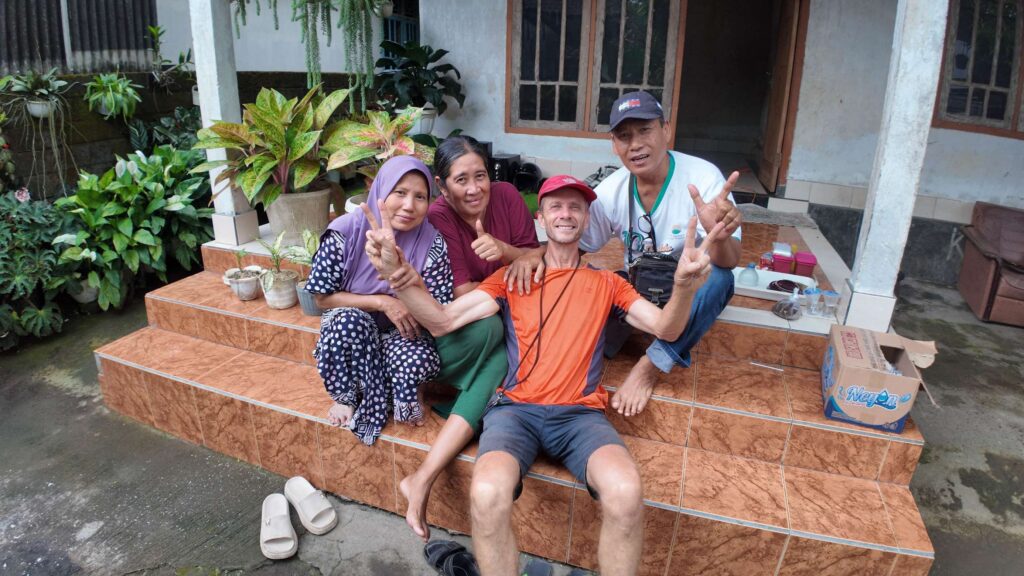
In Tetebatu and the surrounding villages, there’s an approach to tourism organized in a way I’ve rarely seen so well thought out — and so discreet.
I met one of the people leading this effort, a man who coordinates several villages around a shared approach, with a genuine community spirit: any resident can take part if they want to. What struck me in our conversation was the clarity of his thinking. They know exactly what they want to offer, and especially what they don’t want to become.
No aggressive tourism. No pressure to buy. No staging of local culture to satisfy some prefabricated expectation. What they offer is real access to their life — with all the simplicity and unpredictability that implies.
It’s a form of tourism less focused on consumption, more grounded in exchange. That might sound like a vague formula. On the ground, it takes a very concrete shape: they offer, they don’t impose. They share, they don’t perform.
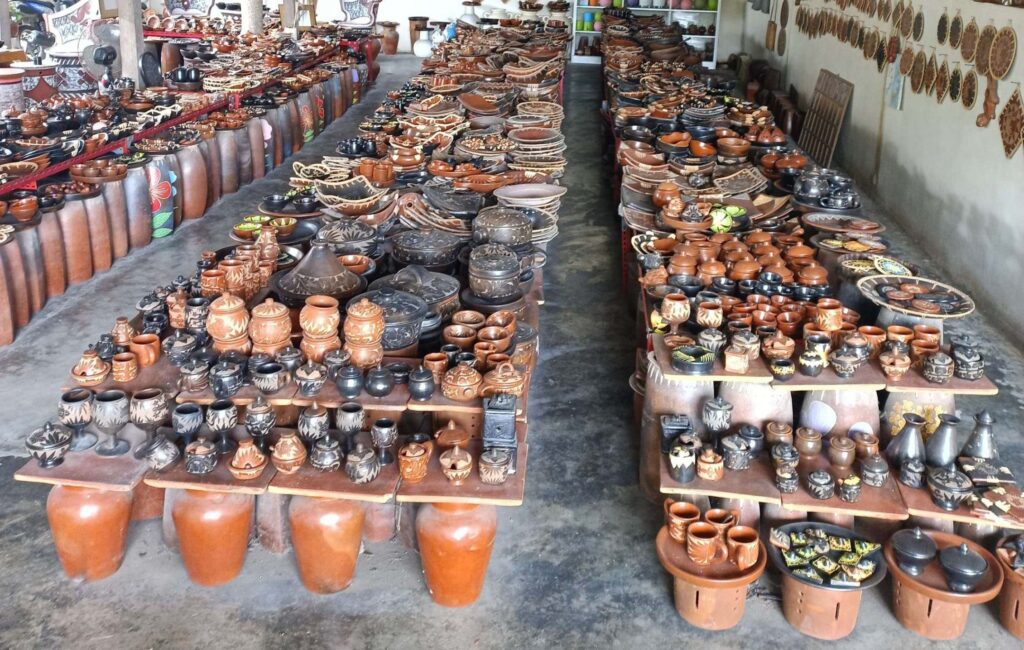
Prices stay modest. The work is mostly volunteer-based. And there’s a genuine invitation — not a commercial one, a sincere one — for those who’d like to get more involved in the project over time.
Helping buy school supplies for the children, sitting in on a cooking class, visiting a Quranic school, learning to make a bamboo mat or try pottery — none of this was presented as an attraction. It was an offer, made gently, entirely optional.
What I observed of local Islam
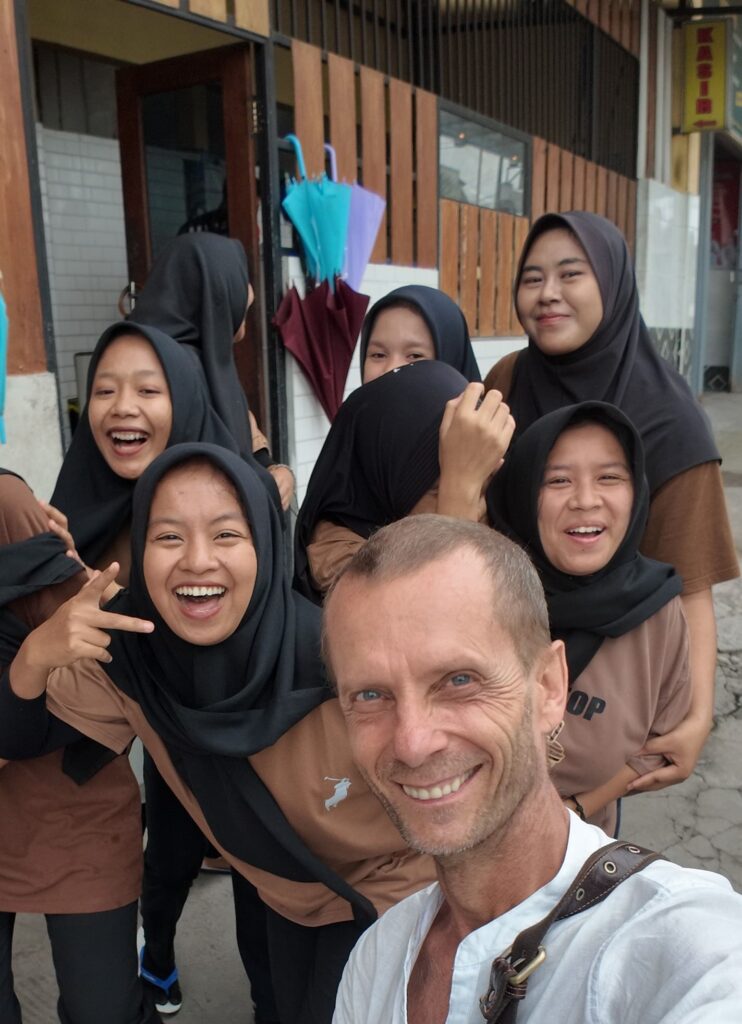
I want to say a word about this because it’s an important part of what I experienced in Lombok.
The Islam I encountered in the Tetebatu area is gentle, open, deeply respectful. Mosques are everywhere — and with them, the calls to prayer, powerful, ringing out several times a day from all the surrounding villages. It’s a detail that can be surprising at first, even unsettling. But according to many people who’ve lived here a while, you get used to it fairly quickly. And there’s something special about hearing those voices carry across the countryside at dawn, over rice paddies still wrapped in mist. Ramadan is observed seriously — but without any form of exclusion or closing off to others.
People naturally folded me into their daily life, without ever asking me to adopt anything. Religion was never a point of friction. It was simply one dimension of their life, like cooking or farming.
I don’t claim to draw a general conclusion from two weeks in one corner of Lombok. But I can testify to what I saw: a community that practices its faith with serenity and welcomes outsiders with sincere generosity.
What the Tetebatu area makes possible
I didn’t come here to learn about plant medicine, or to understand how coffee is roasted locally, or to reflect on my relationship with nature.
All of that came about because I was there, because I stayed, and because I let things happen.
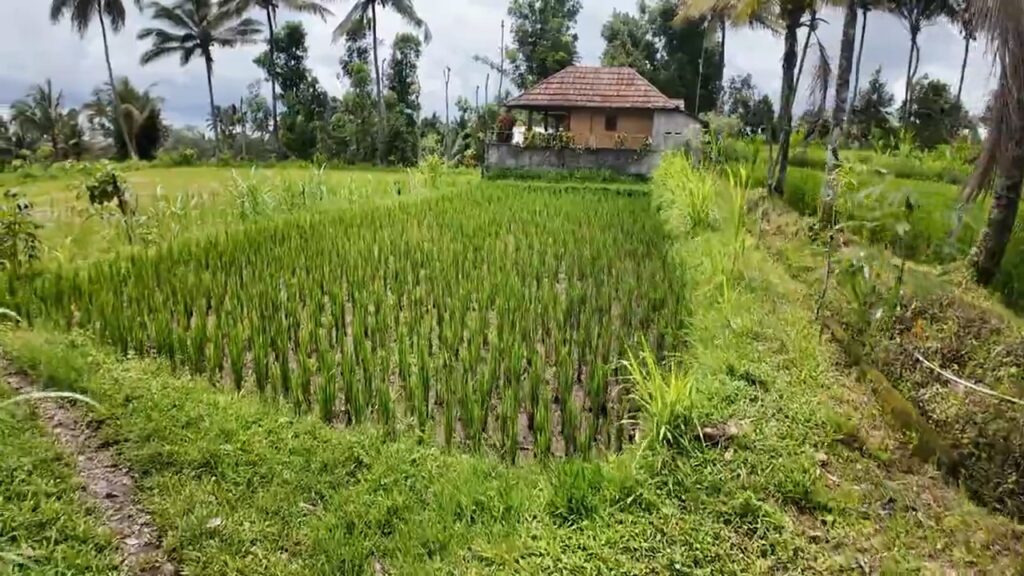
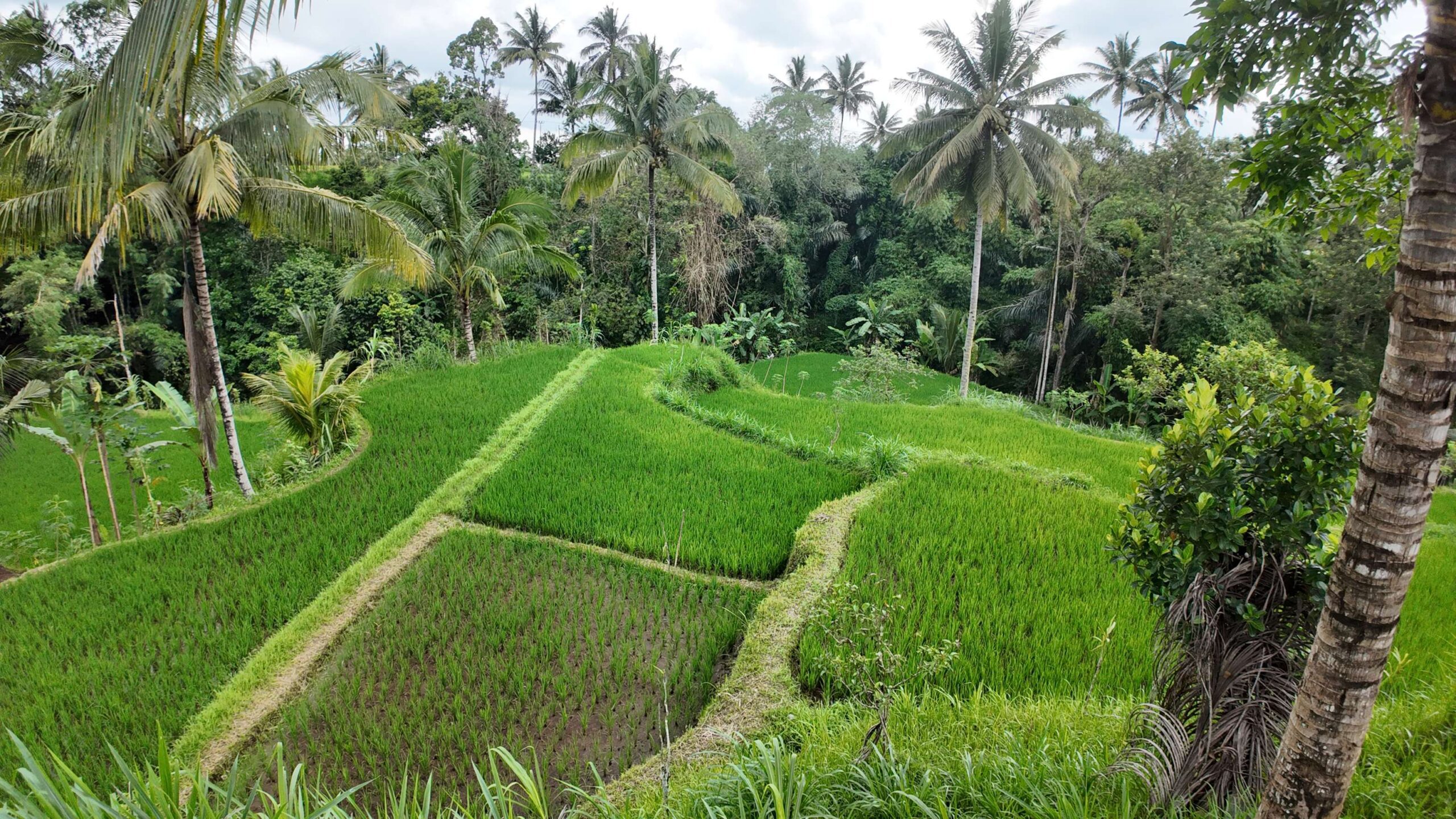
For some travelers, this region will simply be a beautiful stretch of rice paddies and tropical forest. And that’s already a lot — because the beauty here is real, not staged. The landscapes have a rare quality, a natural generosity that doesn’t need arranging to impress.
For others — those looking to understand a place and the people who live there — the experience can go further: observing how a community lives with its environment, how it organizes its exchanges with the outside world, what it chooses to pass on and what it protects.
The Tetebatu area isn’t a spectacular destination in the classic tourism sense. But it offers something few places still offer: real, accessible local life, and residents who don’t seem worn down by tourism.
Higher up the mountain, the Sembalun valley reveals another side of Lombok — its strawberry fields, fruit trees, high-altitude savannas at the foot of Rinjani. That will be the subject of another visit.
This kind of experience is exactly what I’m trying to explore in my Six-Month Challenge: getting out on the ground, meeting people, and understanding how people really live in these regions.
➡️ Six-Month Challenge → personal project
Planning your visit
A few practical points, without claiming to be exhaustive.
Duration: five days is a minimum to start getting into the experience. Less, and you miss the essential. Two weeks allow for something deeper.
Accommodation: the choice is wide. Many residents build simple, independent places to stay next to their own home — that’s often where the experience is richest. Others offer somewhat more developed facilities. There are also resorts in idyllic settings for those looking for more comfort. There’s something for every expectation. The difference isn’t just about standard of comfort — it’s a difference in the whole experience.
Walks: the trails around the national park are accessible without heavy organization. A local guide is genuinely worth it — not for the route, but for what he teaches you along the way.
Geographic context: the area is part of a wider cluster of villages and hamlets at the foot of Rinjani. Kotaraja is a few kilometers away. Kembang Kuning, Sapit, Bebidas are in the same vein — places worth a detour if you’re in the area.
Worth noting: this isn’t Seminyak or Canggu, those hubs of festive tourism and modern conveniences. Facilities stay simple, nightlife is nonexistent — it’s a different way of traveling, a different relationship with the place and the people who live there.
➡️ Also worth reading: 6 Months in Asia: the complete guide 2026
Leave a Reply