
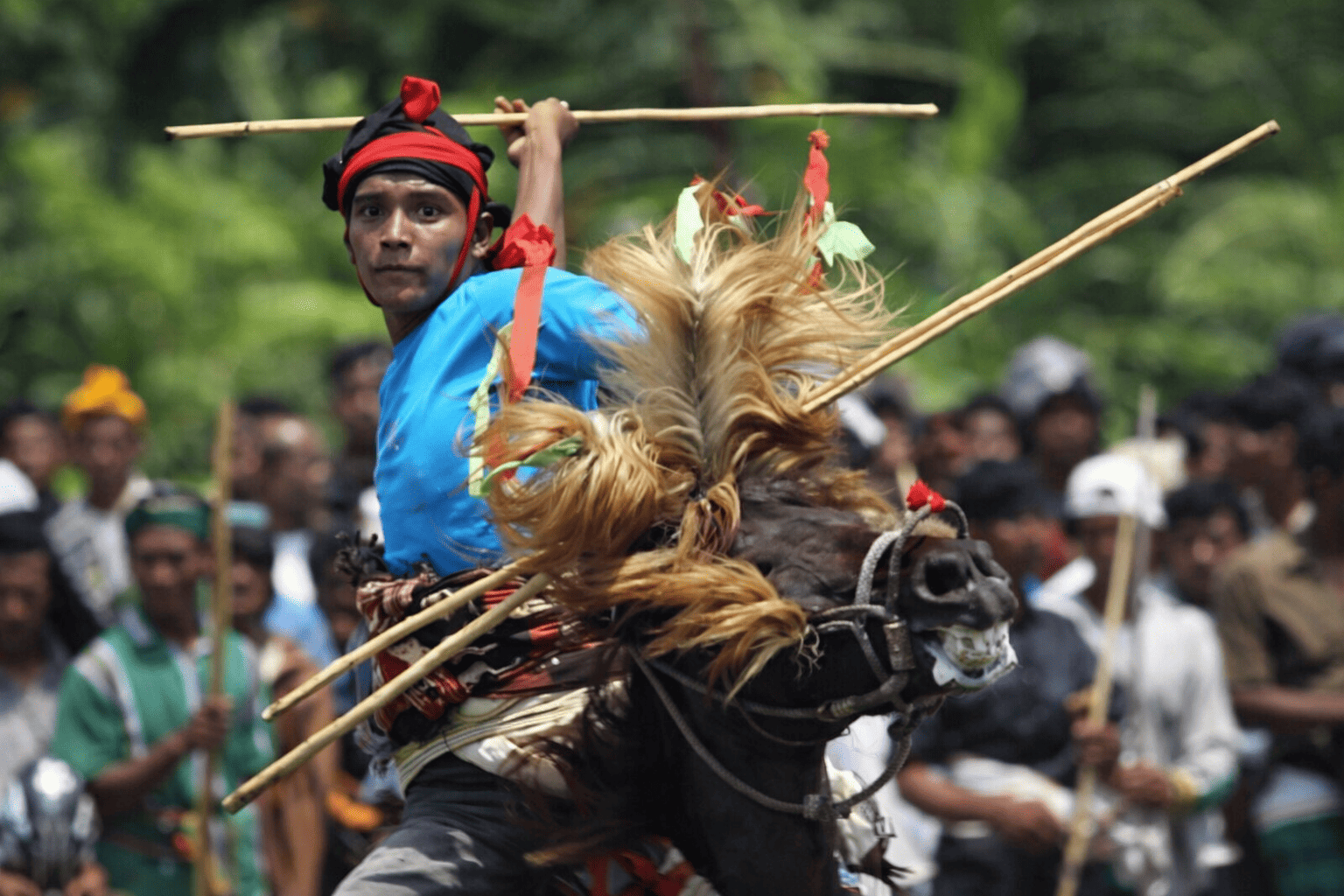
The Pasola is one of the most spectacular rituals in Indonesia. Every year in February or March, several villages in West Sumba hold this traditional horseback fight, where riders face off with spears on a grassy field.
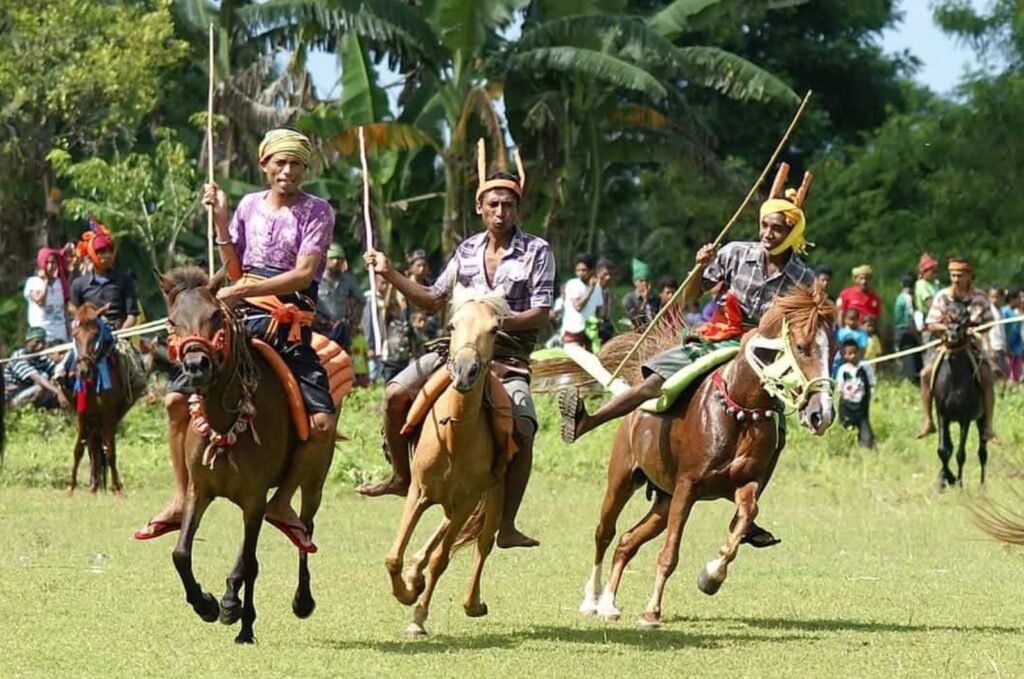
If you’re planning to attend the Pasola, this guide gives you all the practical information: 2027 timing, best villages, detailed budget and tips to experience this in the best conditions.
THE FIELD ACCOUNT
To understand what the Pasola really feels like, read my account from Ratenggaro.
Pasola in Sumba: inside a spectacular ritual near the village of RatenggaroRead the account →
FIND YOUR WAY
Go straight to
Dates, prices and transport may change.
🟨 Pasola 2027: when does the festival take place?
General period
The Pasola happens every year in February or March, depending on the lunar calendar and the appearance of the nyale sea worms.
Pasola 2027 period: mid-February to mid-March
The exact dates are only announced 2 to 4 weeks ahead by the organizing villages.
This uncertainty is part of the ritual: the Pasola depends on natural cycles, not a fixed calendar.
General schedule by village
Each village holds its Pasola at slightly different times. Here are the usual periods (approximate):
| Village | Region | Usual period | Popularity |
|---|---|---|---|
| Lamboya | West Sumba | Mid-February | ⭐⭐⭐ (very busy) |
| Kodi | West Sumba | Late February | ⭐⭐ (moderate) |
| Wanokaka | West Sumba | Early March | ⭐⭐ (moderate) |
| Gaura | Southwest Sumba | Mid-March | ⭐ (low traffic) |
| Ratenggaro | Southwest Sumba | Mid-March | ⭐ (very local) |
→ Important: These periods are indicative. The exact dates vary each year depending on the lunar calendar.
How to find out the exact 2027 dates?
🟦 Contact local accommodations
Homestays in Tambolaka, Waikabubak — they’re informed as soon as the official announcement is made.
🟦 Follow local social media
Sumba guide Instagram accounts, Sumba traveler Facebook groups.
🟦 Recommended timing
Watch for announcements in late January 2027, and plan 1-2 weeks of flexibility.
🟦 Solution if dates are unknown
Arrive mid-February and stay 2-3 weeks to enjoy Sumba while waiting for the Pasola.
Flexibility is the key to catching the right event.
🟦 Which village to choose?
Not all villages offer the same experience.
Some draw large crowds, others stay very local. Here’s a comparison to help you choose based on what you’re looking for.
🟦 Lamboya (the best-known)
Lamboya hosts Sumba’s most spectacular Pasola. The organization is well-oiled, infrastructure developed, and the number of horsemen impressive.
This is where most travelers go first.
The trade-off: lots of tourists, and lodging prices rise sharply during the festival period.
The atmosphere stays local, but less so than in the more isolated villages.
Who it’s for: First timers, looking for maximum spectacle
🟦 Kodi (authentic and accessible)
Kodi offers a good balance: less touristy than Lamboya, but still well organized and easy to reach from Tambolaka.
The Pasola here keeps an authentic character while staying spectacular.
Infrastructure is decent without being luxurious. It’s a smart compromise between immersion and practicality.
Who it’s for: Perfect balance of spectacle/immersion
🟦 Wanokaka (medium size)
Wanokaka draws fewer people than Lamboya or Kodi.
The community feel is strong, prices stay stable, and the experience keeps a marked local dimension.
The Pasola here is less imposing in terms of horsemen, but the authenticity more than makes up for it.
Who it’s for: Looking for authenticity without isolation
🟦 Ratenggaro and Gaura (local immersion)
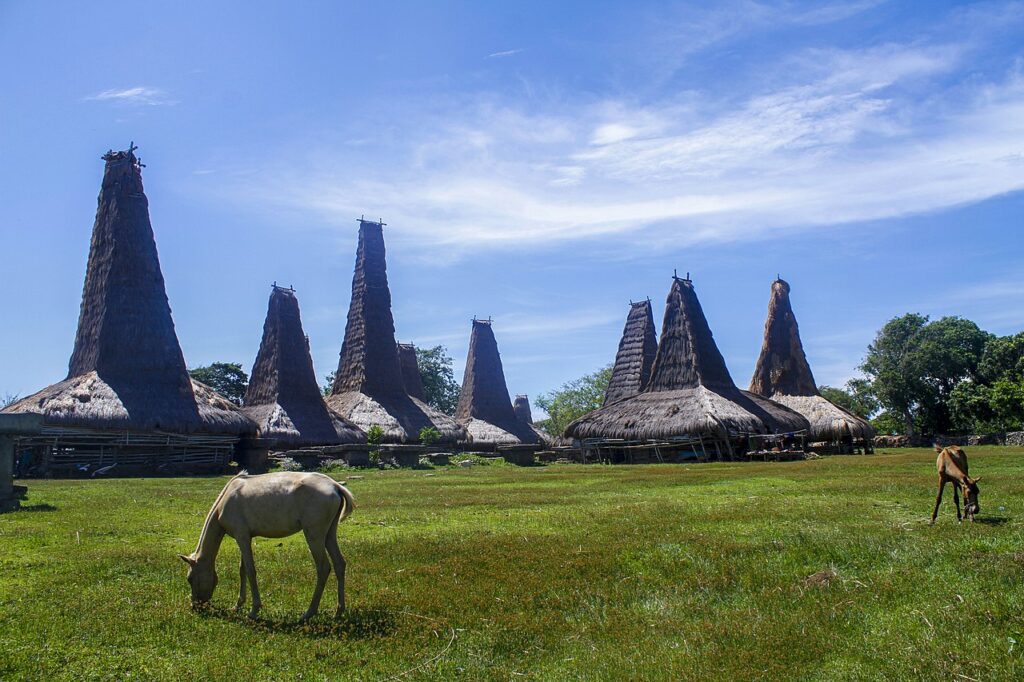
These two villages offer the most local experience.
Very few tourists, a simple but sincere organization, and a strong community atmosphere. In Ratenggaro, the traditional village with its Marapu roofs adds a spectacular dimension to the setting.
Infrastructure stays basic, and the number of horsemen is more limited than in Lamboya.
But for those looking for maximum immersion, this is where it happens.
My experience: I attended the Ratenggaro Pasola (the exact spot is called Maliti Bondo Ati) on March 9, 2026.
Who it’s for: Looking for maximum immersion
Comparison table
| Criteria | Lamboya | Kodi | Wanokaka | Ratenggaro |
|---|---|---|---|---|
| Spectacle | ⭐⭐⭐ | ⭐⭐⭐ | ⭐⭐ | ⭐⭐ |
| Authenticity | ⭐⭐ | ⭐⭐ | ⭐⭐⭐ | ⭐⭐⭐ |
| Tourists | Many | Moderate | Few | Very few |
| Infrastructure | ⭐⭐⭐ | ⭐⭐ | ⭐⭐ | ⭐ |
→ My recommendation:
- First time: Kodi (balance of spectacle/authenticity)
- Looking for immersion: Ratenggaro or Gaura
- Looking for maximum spectacle: Lamboya
🟦 How to get there
From Bali to Sumba
Flights Denpasar → Tambolaka (West Sumba’s main airport) or Waingapu (East Sumba)
Airlines:
- Nam Air (book online at flynamair.com)
- Batik Air
- Wings Air (no direct flight)
The first two are generally the cheapest.
Frequency: 1-2 flights/day
Duration: 1h15
Price: €50-120 (varies by season)
→ Important tip: Book 1 month ahead — prices rise sharply during the Pasola period.
From Tambolaka airport to the villages
🟦 Option 1: Scooter rental
Price: €6-10/day
Total autonomy
Distance Tambolaka → Ratenggaro: ~1h15
Distance Tambolaka → Lamboya: ~45 min
Who it’s for: Independent travelers, backpacker budget
🟦 Option 2: Car rental + driver
Price: €40-60/day
Comfortable, no driving involved
Ideal for a group of 3-4 people
Who it’s for: Comfort, groups, not wanting to drive
🟦 Option 3: Guide-driver (recommended)
Hiring a guide-driver really changes the experience.
They take you straight to the right spots, can show you lesser-known places, and bring you into families or villages they know well. The immersion is much stronger.
Other advantages: far less tiring than a scooter, doesn’t depend on the weather (heat or rain), and makes it easier to string together several Pasolas or spots over a few days.
Rates: €50-75/day for a car with a driver-guide (sometimes a bit less depending on duration)
It’s a very worthwhile solution, especially if there are several of you.
You can also find a French-speaking guide.
Who it’s for: Those who want to make the most of their time and experiences
→ Note: It’s possible to go without one, since people are genuinely approachable and open, but a guide saves time and probably opens the door to other experiences.
🟦 Option 4: Public transport (bemo)
Price: €1-2
Very cheap
Irregular schedules
Requires patience
Who it’s for: Very tight budget, flexible schedule, budget-conscious backpackers
🟦 Option 5: Hitchhiking
I met Tom, a very friendly, smiley young German who did almost everything by hitchhiking.
According to him, it’s extremely easy.
People pick you up very easily, and sometimes you don’t even need to ask: they stop, ask where you’re going, and take you along.
He rarely flew, walked a lot too, moved between islands by ferry, which sometimes meant 24-hour boat rides and the same by car, because distances are still very long on and between some islands.
He told me he’d once gotten a ride from a truck. The trip lasted over 15 hours, but he managed to sleep in the back of the cab fairly easily.
That’s obviously a different kind of travel.
Who it’s for: Very budget-conscious, young backpackers
Road conditions
Main roads are paved and generally in good condition, except in a few spots.
Always stay alert: dogs on the road are common.
Some villages are reached by dirt tracks, and during the rainy season (February-March), mud can make certain stretches tricky.
🟩 Detailed budget
This section is based on my actual expenses from February 25 to March 12, 2026 (16 days on Sumba).
My real budget (16 days/15 nights)
| Item | Amount | Detail |
|---|---|---|
| Round-trip flight Bali-Sumba | €106 | Nam Air (booked 10 days ahead) |
| Accommodation | €178 | Homestay/guesthouse (about €12/night) |
| Local transport | €118 | Scooter 16 days (€94, ~€6/day) + fuel (€5) + taxis (€19) |
| Food | €200 | Warungs + restaurants (€12.50/day) |
| Activities | €14 | Village entries, sites |
| TOTAL | €616 | 16 days |
Average daily budget: €38.50/day (with flight) or €32/day (without flight)
Estimated budget for 1 week (7 days)
If you’re coming for a week for the Pasola + exploring:
| Item | Backpacker budget | Comfort budget | High budget |
|---|---|---|---|
| Round-trip flight | €100-120 | €100-120 | €100-150 |
| Accommodation | €50-70 | €140-210 | €280-420 |
| Transport | €40-50 | €280-350 | €350-450 |
| Food | €60-90 | €120-180 | €180-280 |
| Activities | €10-20 | €20-40 | €50-100 |
| TOTAL | €260-350 | €660-900 | €960-1400 |
Budget/day (without flight):
- Backpacker: €23-33/day
- Comfort: €80-110/day
- High: €120-180/day
Cost breakdown
🟦 Round-trip flight Bali-Sumba
Nam Air or Batik Air: €50-120
Booking 1 month ahead recommended
Prices can sometimes rise during the Pasola period
🟦 Accommodation (per night)
Basic homestay: €10-15
Guesthouse/small hotel: €20-30
Comfort hotel: €40-60
Resort: €70-150
🟦 Local transport
Scooter rental: €6-10/day
Fuel: ~€5/week (normal use)
Car + driver: €40-60/day
Guide-driver: €50-75/day
🟦 Food (per day)
Local warung: €8-12
Restaurants: €15-25
Mix of warung/restaurant: €12-18
→ General note:
Sumba has a reputation for being expensive, because most people hire a driver-guide with a car (also a good option), but you can get by at rock-bottom Indonesian prices (€30-35/day all included) by staying in homestays and adjusting your food: warungs, local markets.
🟩 Where to sleep
🟦 Tambolaka (logistics base)
Near the airport with a good choice of accommodation.
Convenient for a late arrival or early departure, but far from the Pasola villages (1h+ by scooter).
→ Note: Lodging close to the Pasolas can sometimes be dirty (according to a local guide) or very basic for small budgets. Otherwise, you’re looking at mid-range to expensive options.
🟦 Waikabubak (West Sumba’s main town)
West Sumba’s center, with many hotels and restaurants.
A slightly more touristy town, but still very local, with traditional markets everywhere.
Distance to villages: 30-60 min
🟦 Directly in the Pasola villages
Total immersion, right next to the event, and no travel needed on the big day.
Choice of lodging stays limited, and you need to book early (1 month ahead minimum).
Who it’s for: Looking for maximum authenticity
Types of accommodation
Homestay, local guesthouse or small hotel: €10-30/night
Higher standard: €30-60/night
🟧 Safety and behavior
Physical safety
The spears really do fly — this isn’t staged.
Stay at least 10-15 meters from the horsemen during charges, and never cross the field during a clash.
Follow the local organizers’ instructions.
I didn’t see any serious injuries at the Ratenggaro Pasola, but caution is still essential.
Respecting the tradition
The Pasola is a sacred ritual, not a tourist show.
Ask permission before photographing people (generally granted systematically — if anything, people seem flattered, very approachable).
Respectful clothing recommended (avoid very short shorts, tank tops), and don’t disturb the preparatory rituals.
Health and comfort
Bring water (not always available on site) and even food.
The sun can be strong — sunscreen and a hat/cap recommended.
An umbrella is useful depending on the season.
🟩 Practical checklist
To bring on the day
- Charged camera or smartphone
- Power bank
- Water (2 L minimum)
- Snacks
- Sunscreen
- Hat
- Light long clothing (respect + sun protection)
- Mosquito repellent
- Cash (few or no ATMs)
To plan ahead
- Book your flight 1 month ahead (advisable if you know your dates — personally, I booked 10 days ahead for the outbound and 3 days ahead for the return)
- Book accommodation 1 month ahead
- Check the exact dates 2-3 weeks ahead
- Plan for a full day
- Download offline maps (Maps.me or Google Maps)
🟩 Sumba beyond the Pasola
If you’re coming specifically for the Pasola but the dates aren’t confirmed yet, Sumba is well worth staying for several days.
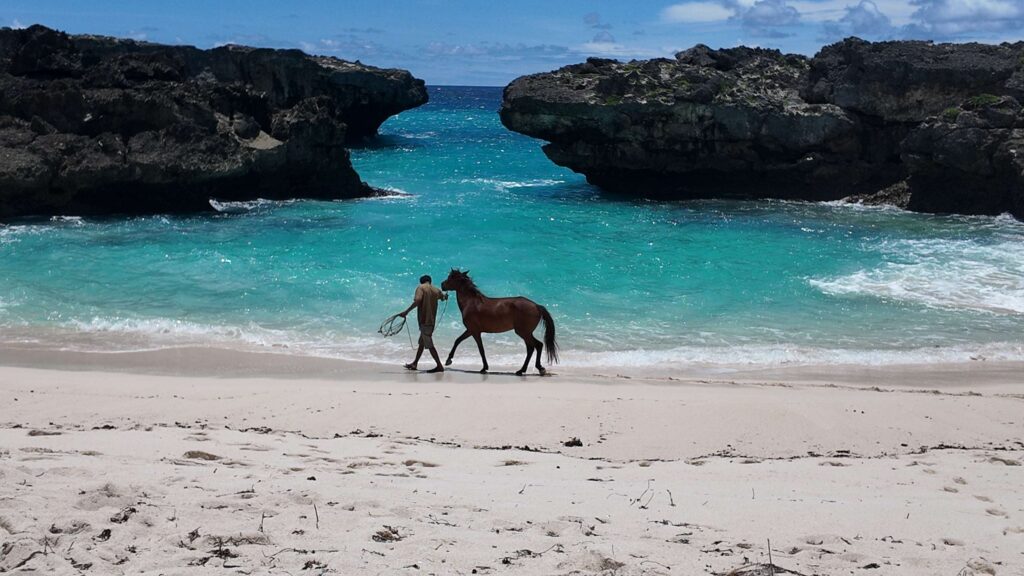
What you can do while waiting:
- Spectacular beaches: Marosi, Weekuri, Mandorak and many others
- Traditional villages: Kampung Adat Ratenggaro, Praijing, Tarung
- Waterfalls: Lapopu, Wai Marang
- Landscapes: rolling hills and savannas in the centre and east of the island
Recommended length of stay:
Minimum: 3-4 days (Pasola + 1-2 days exploring) — possible but short, honestly it’s a shame
Ideal: 1 week (Pasola + discovering the island) — for me that’s the minimum… depends on the person
Immersion: 2-3 weeks
🟩 Conclusion: get ready for a unique experience
The Pasola is much more than a show: it’s a living ritual, rooted in local culture, that keeps existing independently of tourism.
My essential tips:
- Favour Kodi or Ratenggaro for an authentic experience
- Lamboya for more crowds and spectacle
- Book your accommodation 1 month ahead
- Watch for date announcements in late January 2027
- Plan for flexibility (1-2 weeks) if possible
- Arrive early on the day to pick your spot (less true in Ratenggaro or Kodi)
If you’re considering a longer trip through Southeast Asia, I explain how to organize this kind of adventure in my guide:
Have a great trip to Sumba!
Leave a Reply