
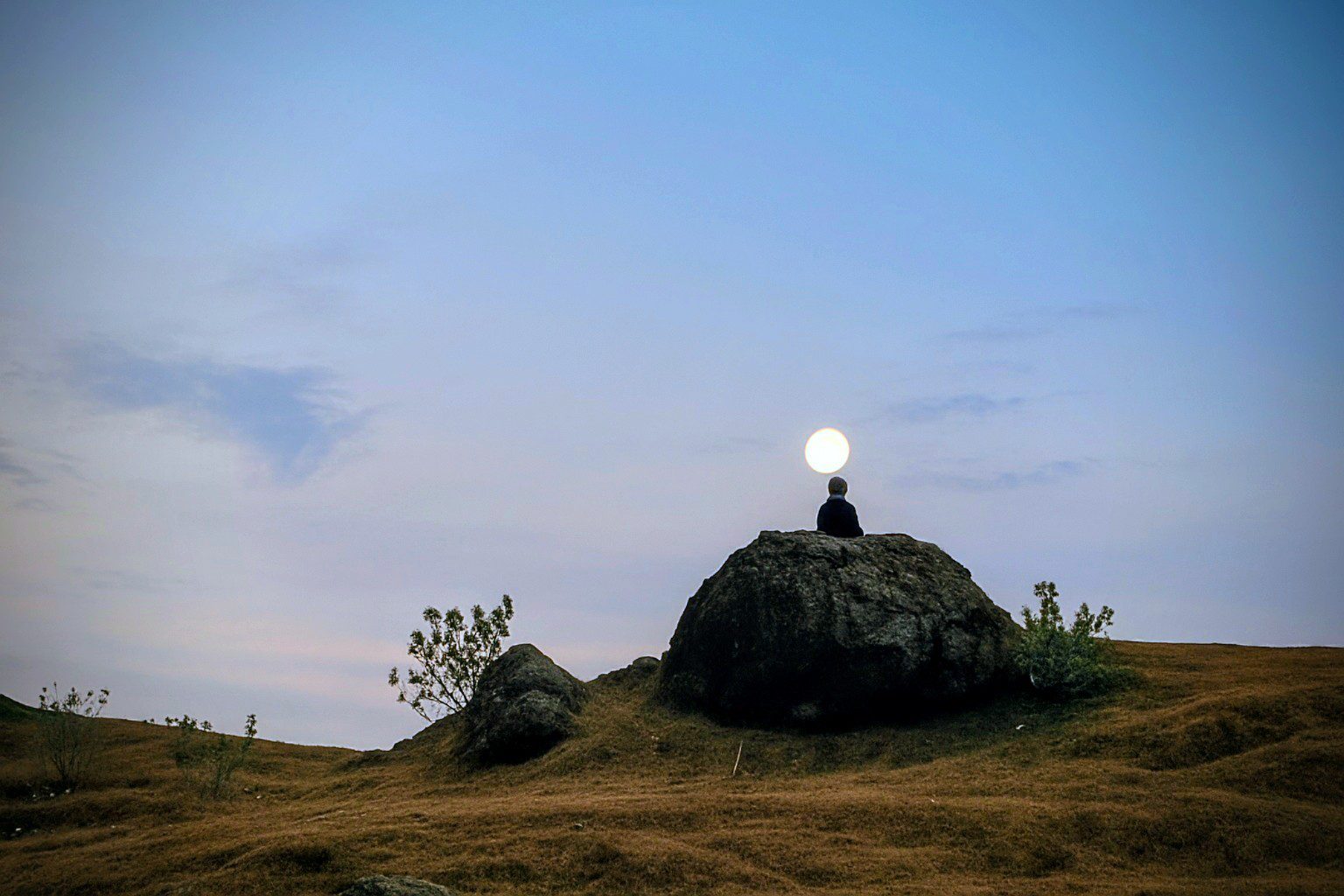
How do I spot — and validate — a place that can support a life transition?
For me, the answer comes in three layers, always in the same order: first emotional, then mental, then physical.
Emotional A place speaks to me if, within the first few seconds, something inside me says: “ah, yes…”.
Mental Once that feeling settles, I check whether it really matches what I’m looking for.
Physical I can walk, explore, feel the nature… and above all feel some energy — that impulse that makes you want to move, be active, keep going.
And I want to make one important point: you don’t look for a transition place at just any phase of life.
You look for one when an inner transition is opening up. When something is quietly — or abruptly — ending, and something else wants to be born.
That’s exactly where I was when I wrote this piece.
Find your way
Why this search at that moment
I’ve already shared on this blog the stages of this transition: the project taking shape, the successive confirmations, the first concrete steps put in place.
This exploration doesn’t stay theoretical. I document its practical side — real budget, visas, planning, settling in — in this guide:
6 Months in Asia: the complete guide
Nothing really changes over a few months… and yet, you sometimes feel a cycle closing.
You feel the need to redefine yourself, reinvent yourself, find a deeper, more alive sense of meaning, fill something inside that has emptied out over time.
As I’ve written elsewhere, sometimes the inside changes before everything else, and this search then takes on a new shape.
The place I was looking for wasn’t a final destination. It was a space that could support a transformation already under way.
This work of observation was also part of my six-month challenge, where I explored different environments to better understand what truly supports a freer way of living.
What I call a transition place
A transition place is somewhere that can support a deep change.
It isn’t
- A place to “disappear”
- A perfect backdrop
- A miracle solution
It is
- A space favourable to transformation
- A place that helps you get back into the flow of your own life
- A place that lets you create a new rhythm
It could be: a high mountain, a village, an island, deserted or inhabited, a stretch of countryside surrounded by rice paddies, or even, for others, the top floor of a building in the middle of a city.
It isn’t the shape that matters. It’s what it does inside.
The invisible criteria
A transition place, for me, is first of all an atmosphere.
A mood that soothes without putting you to sleep, a feeling of harmony, a certain simplicity, the sense that you can move freely, and the possibility of creating a new life rhythm.
It’s also a place that can, if needed, energize and stimulate me: where I can be at peace, but not stuck in place.
The concrete criteria
Then come the very simple, very down-to-earth things:
access that isn’t too complicated, nature within walking distance, a reasonable cost of living, the chance to walk and explore, a living environment simple enough not to get lost in, and surroundings where I don’t feel completely foreign.
I’ll add one criterion that matters to me: a lifestyle that’s pleasant and comfortable, in my own way.
Simple but good food, somewhere I can sleep well, and, if possible, a gym I actually want to go to regularly.
It isn’t luxury in the classic sense, it’s just a foundation so the body can keep up with the movement.
Deep down, a transition place is somewhere you can become yourself again… and at the same time become someone new.
How I sense a place can support this transition
I could claim I have very precise criteria. Yes and no.
There are markers, of course. But in reality, it all starts with a moment — and quite often, what the place reveals is simply an inner movement already under way.
The immediate signals
There’s that well-known moment when something inside me says: “Ah, yes.”
A brief certainty. A lightness in the body. A subtle atmosphere, hard to describe, but present, gently settling in.
What I look at first
On the surface, I’m not looking at anything in particular. I let myself be surprised. I let the place speak before trying too hard to understand it.
Showing up with too tight, too rational a framework is often the surest way to miss the essential.
What says “no”
Conversely, a place can be very beautiful… and not be right for me.
Sometimes it’s an atmosphere that tightens you up slightly, a tension in the air, a rhythm that drags you down.
You feel it in the body before you can put words to it. Something in us closes up a little instead of opening.
It’s often clearer than a “yes”.
The places that have already given me this feeling
Tetebatu, Lombok — the natural place
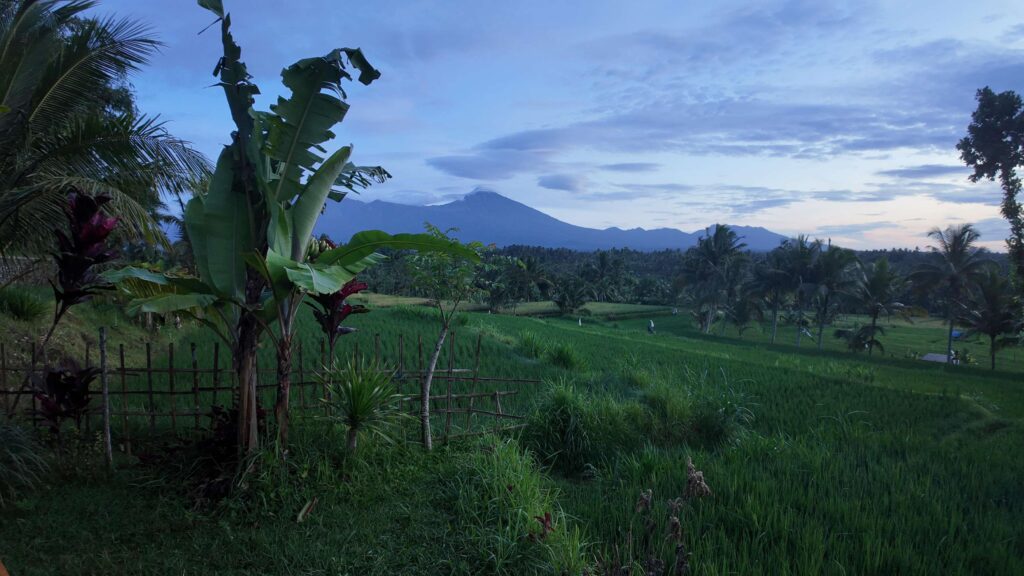
Tetebatu checks almost every box:
- the calm
- the gentle altitude
- the cascading rice paddies
- the authentic villages
- the right kind of slowness
- the chance to walk for a long time without noticing time pass
And above all: the friendly, sincere, sometimes almost brotherly contact with the locals. Nature there is exceptionally rich: medicinal plants, simple food, water, vegetation.
It’s a place that brings you back to yourself without asking any effort.
Tetebatu, for me, has the potential of a natural, almost obvious transition place.
The hills and beaches around Kuta Lombok
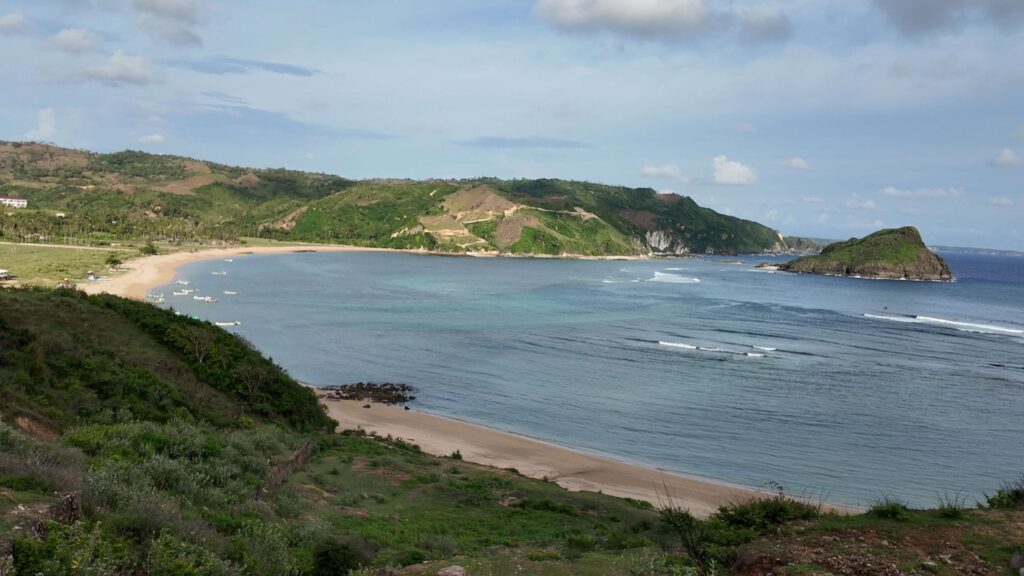
I’m not just talking about the town — even though it offers useful amenities. I’m also talking about what surrounds it.
The hills, first, where the force of nature shows in the contrasts, in the way light falls on the terrain.
Then the beaches: some almost empty, others more family-friendly, with a relaxed, smiling local atmosphere, and a few more touristy coves that still respect the local style.
In places, the landscapes really do look like they were sculpted by giants. Nature there is perfectly capable of reaching you, of shaking something loose inside.
It isn’t a complete transition place. But it’s somewhere you can find yourself again, and where you feel you could come back again and again.
Ubud — the place you have to tame
Ubud has a particular energy. It isn’t an immediate transition place.
You have to find the right area, the right street, the right balance between calm and bustle, creativity and nature.
Ubud requires some adjusting, sorting, choosing. But you can sense there’s something to explore, a possibility, as long as you choose your base carefully.
The islands I’m still looking for
I’m looking for an island to live on simply, with a degree of self-reliance:
- fish from the shore
- find some fruit
- walk
- breathe
This search echoes another piece where I already explore this tension between reality and imagination.
Living on an Island… or Almost
Some names keep coming back: Togean, Karimunjawa, Ko Kut, Siquijor, Banda…
But the place itself isn’t found on a map. It will be discovered on the ground, through direct contact, through the way the place responds — or doesn’t — to what I’m in the process of becoming.
What I was looking for then
For that phase, I wasn’t looking for a backdrop. I was looking for an encounter.
Whether it was by the sea or in the mountains mattered less to me than the rightness of the place.
What I was hoping for was somewhere calm, close to nature, with real local life, where I could explore on foot, live at a reasonable cost, and find a rhythm that felt like me.
And then there was what doesn’t show up in photos: the chance for simple conversations with people already settled there. Those who’ve found their place.
I like asking them: “Why here? What do you love about this place?”
Their answers often say more than any guidebook or blog post.
For the rest… experience would decide.
Spotting a transition place
Spotting a transition place has nothing to do with the quest for a perfect place.
It’s more about looking for a place that allows an opening, a place that makes you want to get moving again, where, without quite knowing why, something in us starts breathing differently again.
As for me, I’m still on my way.
This blog follows the movement, step by step: the places that draw me in, the ones that don’t suit me, the encounters, the trials, the turnarounds, and maybe one day, that moment when I’ll simply say to myself:
“Here, for now, is enough. I can stay a while.”
Leave a Reply