
Six months is long enough to move past the tourist trip and discover what daily life actually becomes. This guide gathers what I tested, observed and adjusted on the ground: budget, destinations, paperwork, difficulties and room for freedom.
Everything you need to know to prepare a 6-month stay in Southeast Asia: real budget, tested destinations, concrete steps, daily life
Leaving for 6 months in Asia isn’t a trip.
It’s a test.
Based on several months living and travelling in Indonesia and Thailand.
A test of lifestyle. A test of pace. A test of what you think you want… against reality.
Many people leave with a picture in mind. Few stay long enough to see what’s behind it.
After a few weeks, the excitement fades. The scenery becomes normal. And what’s left is no longer the trip. It’s life.
In this guide, I’m not giving you a dream. I’m giving you what I’ve seen, tested, and adjusted:
- the real budget
- what gets stuck
- what works
- and what no one really explains
In this complete guide to leaving for 6 months in Asia, you’ll understand concretely how to prepare your departure, manage your budget, and avoid the most common mistakes.
STRAIGHT TO THE POINT
What do you want to prepare?
Pick the topic that matches your question right now. Each link leads straight to the right chapter.
- Choose the lengthCheck whether six months is the right balance.
- Estimate the budgetKnow how much to actually plan for.
- Choose destinationsCompare countries and rhythms of life.
- Prepare the paperworkVisas, tickets, insurance and documents.
- Manage your moneyLimit fees, blocks and bad surprises.
- Find accommodationChoose, test and negotiate without getting it wrong.
- Understand daily lifeSee what the days really become.
- Avoid the pitfallsAnticipate the most common mistakes.
- Work remotelyTest what is practically and legally feasible.
- Check whether it suits youCompare the project with your real situation.
01Why 6 months (and not something else)?
Why not 2-3 weeks?
Too short to really settle in.
You stay in tourist mode, not life mode. No time to feel the local pace, build a routine, see past first impressions.
Two weeks is a vacation. Not a life experience.
Why not 1-2 years right away?
Too big a commitment without having tested it first.
Risk of disappointment if you pick the wrong destination. You need an exploration phase before really settling in.
Leaving straight for 2 years without knowing if it suits you is taking a huge risk — financial, logistical, emotional.
Why 6 months is the sweet spot?
Long enough to get out of tourist mode.
Short enough to stay reversible.
Time to test 2-3 different places.
A duration compatible with most visas.
Six months is the balance between discovery and commitment. It’s enough to understand whether this lifestyle suits you. Not enough to lock you into a final choice.
My case
Testing the viability of a nomadic or semi-nomadic life. Seeing whether the transition I have in mind holds up. Experimenting before any long-term decision.
If you’re new to this topic and want to know in what order to move forward, start with this preparation path:
➡️ Long-term travel in Asia: from dream to concrete departure
02Real budget: what does it actually cost?
The budget depends heavily on the country, how often you move, the type of accommodation, the level of comfort you’re after, and your ability to stay several weeks in the same place.
But to leave for 6 months in Southeast Asia without stress, you need a realistic range in mind.
Overall monthly budget
| Travel mode | Realistic monthly budget | Budget for 6 months |
|---|---|---|
| Budget | €800 – 1,200 | €4,800 – 7,200 |
| Simple comfort | €1,200 – 1,500 | €7,200 – 9,000 |
| Comfortable | €1,500 – 2,500 | €9,000 – 15,000 |
These figures don’t mean it’s impossible to live on less. They’re meant to give a realistic base for traveling long-term without being constantly under pressure.
My real budget on the ground
After several months between Indonesia, Thailand, Lombok, Bali and Sumba, my real budget sits around:
€1,000 to €1,500 a month.
So I’m between budget mode and comfortable mode. Not extreme minimalist. Not luxury either.
I’m not trying to live like a local on €500 a month, nor to treat myself to permanent high standards at €2,500. I’m aiming for a balance: enough comfort to hold up over time, without spending needlessly.
I detailed my full experience here after several months in Asia:
➡️ Real budget for Southeast Asia: how long can you really travel?
Breakdown by category: simple comfort mode
| Item | Indicative monthly budget | Concrete example |
|---|---|---|
| Accommodation | €400 – 700 | Airbnb, guesthouse, local rental |
| Food | €250 – 400 | Warungs, simple restaurants, a few Western meals |
| Transport | €80 – 130 | Scooter, fuel, taxis, Grab |
| Activities | €100 – 200 | Sport, outings, excursions |
| Miscellaneous | €100 – 200 | Phone, laundry, small purchases, unexpected costs |
| Total | €1,200 – 1,500 | Simple comfort mode |
Accommodation and how often you move are often the two items that swing the budget the most.
What costs more than expected
Loneliness. When you travel long-term, you may need to go out to see people: cafés, restaurants, activities, social spots. That’s not a luxury. Sometimes it’s what lets you keep up the pace.
Occasional Western comfort. Pizza, coffee, a non-local restaurant, a gym, more comfortable accommodation for a few days. Even if you like the simple life, you may need to reconnect with certain habits.
Health or logistics surprises. Medication, a consultation, changing accommodation, scooter repairs, unplanned transport. Not always big amounts, but they exist.
Concrete example: in Lombok and Bali, I had a few small scooter repairs — a dead battery (forgot the lights on), coolant to top up, a broken kickstand spring. Each time, I found a small workshop in under 10 minutes. The mechanic came immediately, fixed everything for almost nothing (€2 – 5 per repair).
Even without speaking Indonesian, help is usually easy to find. Small garages are everywhere, responsive, and prices stay very low compared to Europe.
What costs less than in France
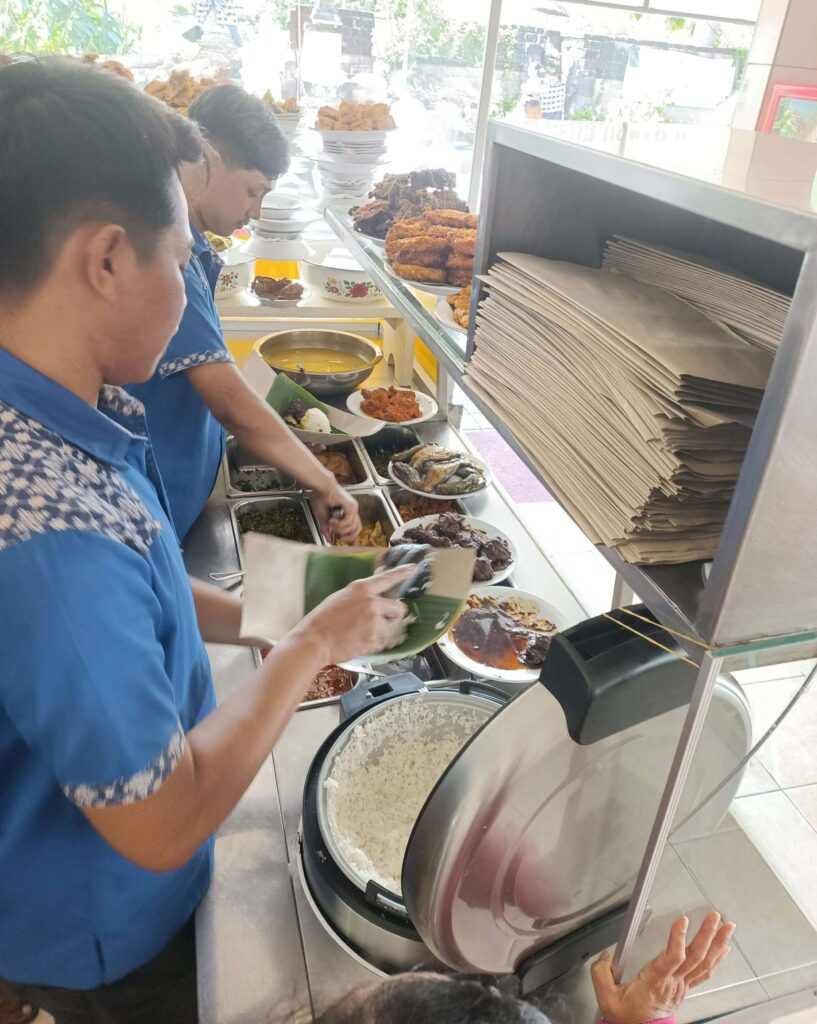
Local food. A full meal at a warung can cost around €3 to €5. In France, the equivalent would often cost three or four times more.
Massages and small treatments. A massage can cost €8 to €15, versus much more in Europe.
Accommodation outside heavily touristy areas. By avoiding the most in-demand areas and staying longer in the same place, it’s still possible to find simple lodging around €15 a night, or about €450 a month.
Can you leave with a much lower budget?
Yes, it’s possible.
With a very simple lifestyle — negotiated housing, local markets, home cooking, few trips, free activities, low-tourist areas — you can sometimes get down to around €500 a month.
But let’s be clear: at €500 a month, the margin for error is small.
The slightest problem can hit hard: a change of accommodation, fatigue, a need for comfort, a visa, health, transport, a repair, an unplanned ticket.
You also need to avoid an overly simplistic comparison with the local cost of living. Many Indonesians or Thais live on very low incomes, but that often rests on different conditions: family on the ground, family housing, local mutual support, no visa fees, cultural habits, a personal network. For a Western traveler, it’s not the same situation.
My simple recommendation
To leave for 6 months in Asia without being constantly stretched financially, I recommend planning for at least:
€800 to €1,000 a month for a budget but viable mode.
And more comfortably:
€1,200 to €1,500 a month if you want to keep some margin, move around, have decent accommodation, handle the unexpected, and not count every expense.
The right budget isn’t just the one that lets you survive on the ground. It’s the one that lets you stay free in your choices.
To test your own departure scenario, you can use the Asia Budget calculator:
➡️ Download the Excel calculator
03Destinations: where to go for 6 months in Asia?
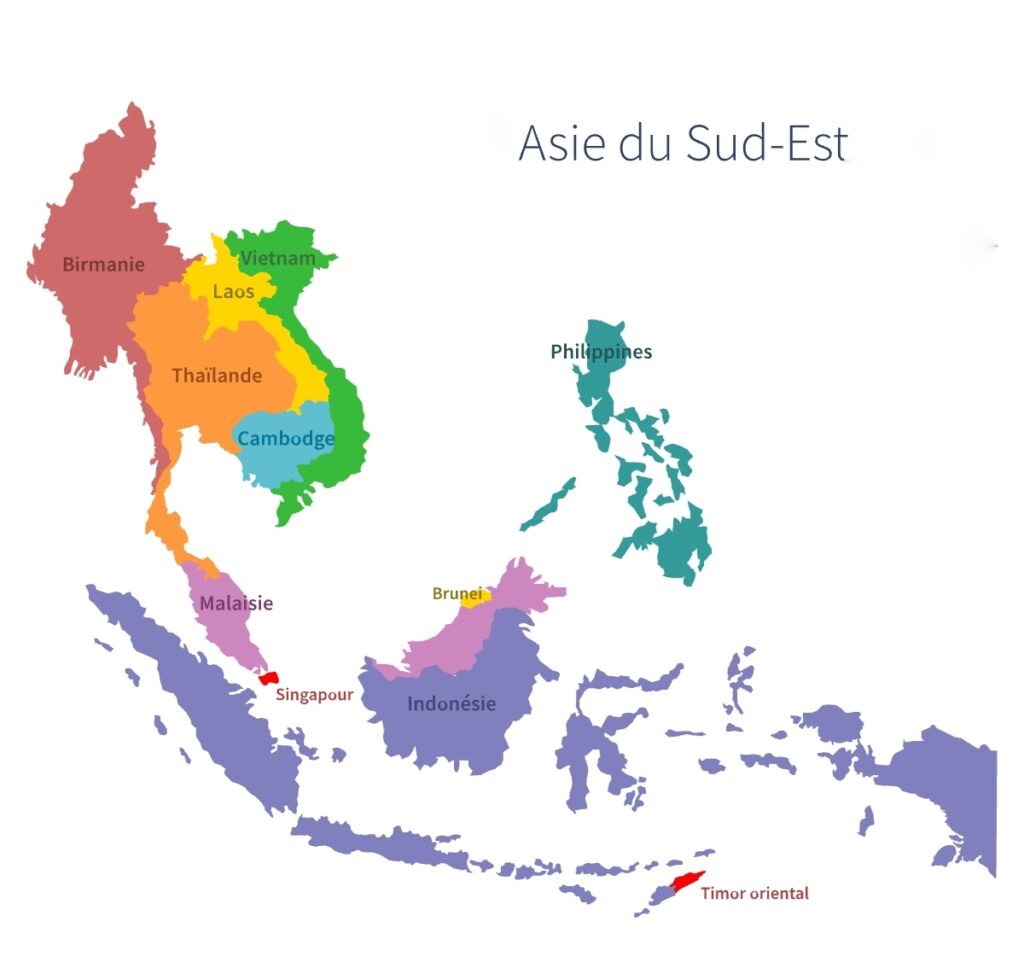
The destinations below aren’t an absolute ranking. They correspond instead to different travel profiles: calm, nature, comfort, energy, adventure, or a first experience in Asia.
The right choice doesn’t just depend on the country. It mostly depends on what you’re looking for during these 6 months: settling down, exploring, working remotely, living more simply, meeting people, or testing several paces before deciding where you feel good.
So the idea isn’t to find “the best destination,” but to choose a starting point that fits your current situation.
Criteria for choosing
Long-term visa possible (or easy visa-runs)
Reasonable cost of living
Decent infrastructure (internet, health, housing)
Quality of life (nature, calm, or energy depending on your profile)
Expat/nomad community or accessible local life
Top 6-month destinations: (by profile)
For calm + nature
🟦 Lombok (Indonesia)
Visa: 60 days, renewable twice = 6 months maximum
Budget: €800-1200/month
Vibe: Calm, rice fields, beaches, mountains
Strengths:
- Exceptional nature
- Welcoming people
- Still not very touristy
Weaknesses:
- Limited infrastructure
- Possible isolation
Lombok is often seen as a calmer alternative to Bali.
I spent a month there in different settings, with real day-to-day adjustments.
➡️ I detailed this experience here: Lombok: Guide and Field Experience
🟦 Chiang Mai & Chiang Rai (Thailand)
Visa: 60-day tourist (no visa required, just an online arrival card)
Budget: €1000-1500/month (or less long-term)
Vibe: northern cities, between temples, nature and a slower pace
My experience:
2 weeks in Chiang Mai + 2 weeks in Chiang Rai, exploring the surroundings (mountains, villages, temples).
- Chiang Mai: comfortable, structured, easy-to-live-in base
- Chiang Rai: calmer, more local, less touristy
Strengths:
- Large nomad community (Chiang Mai)
- Modern infrastructure
- Easy access to nature (hiking, mountains)
- Good balance between comfort and immersion
Weaknesses:
- Seasonal pollution (February-April)
- Very busy in Chiang Mai
- Chiang Rai more limited in activities
My take:
A very good entry point to test life in Asia.
For energy + modernity
🟦 Bali (Indonesia)
Visa: 60 days, renewable twice = 6 months maximum
Budget: €1200-1800/month (touristy areas)
Vibe: Energetic, spiritual, creative
Strengths:
- Everything on hand (coworking, sport, community)
- Endless activities
- Easy social life
Weaknesses:
- Very touristy (though that can have upsides if you know how to pick your spot)
- Expensive in places (but still easy to find very cheap options if you want)
- Road traffic mainly in certain areas (otherwise easy small country roads)
🟦 Penang / Kuala Lumpur (Malaysia)
Visa: 90 days visa-free
Budget: €1000-1400/month (Penang) / €1800-2000/month (KL)
Vibe: Multicultural city, food culture
Strengths:
- Modern, safe
- Cultural diversity
- Excellent infrastructure
Weaknesses:
- Less nature
- Hot/humid climate
Note: So far I’ve only experienced Kuala Lumpur.
For adventure + authenticity
🟦 Philippine Islands (Siargao, Siquijor, Palawan)
Visa: 30 days + easy extensions
Budget: €800-1200/month
Vibe: Beaches, nature, simplicity
Strengths:
- Authenticity
- Natural beauty
- Warm welcome
Weaknesses:
- Basic infrastructure
- Typhoons (season)
Note: I haven’t been there yet.
My recommendation (6 months)
Multi-destination strategy:
1-2 months: Lombok (adjusting, calm, meeting people, trekking)
2 months: Bali (energy, social life, comfort)
2 months: Philippine Islands or Northern Thailand (exploring)
1 flexible month: Total freedom (new place or extend a favorite)
Why alternate?
Avoid getting tired of a place. Test different paces. Compare how livable different places are.
Staying 6 months in the same place can become heavy. Alternating keeps the momentum, the curiosity, the openness.
My own path (testimonial)
October-November 2024: 2-month test in Bali/Lombok. Confirmed my interest.
Back to France (preparation, setting up the blog).
October 2025: Left for 6 months (ongoing).
Current route:
- Bali (base)
- Lombok
- Northern Thailand (35 days)
- Kuala Lumpur (1 week transit)
- Sumba (2-3 weeks)
04Administrative steps
Visas: the main options
🟦 Indonesia
C1 tourist visa (my recommendation)
60 days, renewable twice without leaving the country = 6 months maximum
Price: ~€50 (online application) + 2 extensions (~€50 each)
Important note: The C1 visa is single-entry. If you leave Indonesia during the 6 months, you’ll need to apply for a new visa. In that case, the B1 visa (1 month, renewable once, ~€25) may suit you better.
Extensions: Require physically going to immigration (quick and easy). An agency can help you (~€20-50 service fee) for more convenience.
Online application: https://evisa.imigrasi.go.id
Additional steps for Indonesia:
(3 days before arrival, done online)
- Arrival card (online arrival card)
- Online customs declaration (3 days before)
- SATUSEHAT Health Pass (health declaration)
These 3 steps seem to have
recently been merged into the visa application — info to double-check.
Bali tourism tax: ~€8 (on arrival or online: https://lovebali.baliprov.go.id)
🟦 Thailand
Visa-free: 60 days + 30-day extension
No visa required (just an online arrival card to fill in)
Long-term options:
- ED visa (language school/Muay Thai/cooking): 1 year
- Visa-runs possible but tiring
Note: Thailand has recently tightened the rules. Don’t overuse visa-runs (risk of entry refusal). Student visas seem harder to get than before.
What’s a visa-run? Leaving the country (plane/ferry/land route to a neighboring country) then coming straight back to get a new tourist visa. Doable but tiring and costly (€100-200 per run).
🟦 Malaysia
Visa-free: 90 days
Tip: Fill in the Arrival Card online 3 days before arrival — avoids the wait at the airport.
Easy visa-run (Singapore is close)
🟦 Philippines
Visa-free: 30 days (+ online Arrival Card)
Extensions: 29 days x multiple (easy to get)
My strategy
Indonesia C1 visa, 60 days + 2 extensions = 6 months maximum.
If you want to move between countries, you don’t need a long-term visa. Standard tourist visas are enough.
✦✦✦ Before leaving long-term, it’s also worth understanding what tax residency actually changes.
The famous 6-month rule is often misunderstood.
I explain this here: ➡️Tax Residency: The 6-Month Rule, Myth or Reality?
Health/repatriation insurance
Mandatory.
An often-forgotten tip:
Check whether your French insurance covers long-term travel.
Some insurers (like MAIF) cover up to 1 year outside France — hospitalization, care, repatriation, emergency assistance included.
Potential savings: €1000-1500 over 6 months.
My current strategy: I keep my MAIF insurance, which covers Asia for up to 1 year.
If not covered — main options:
Chapka Cap Aventure: €90-150/month (full coverage)
SafetyWing: €45-60/month (basic)
ACS: €100-180/month (premium)
(Prices vary a lot depending on age)
Note: I haven’t personally tested these insurers, I’m sharing this info based on feedback from the nomad community.
Why you shouldn’t skip it:
Hospitalization in Asia = €1000-5000
Repatriation = €10,000-50,000
Insurance isn’t optional.
Other steps
Before leaving:
✅ Check passport validity (6 months minimum)
✅ Vaccinations (not mandatory for Southeast Asia)
✅ Power of attorney if needed (mail, taxes)
✅ Notify your banks (even Wise/Revolut)
✅ Copy important documents to the cloud — IMPORTANT
On the ground:
✅ French embassy registration (optional)
✅ Local SIM (€5-15/month, better than international)
✅ Find a reliable doctor/hospital (before you need one, just in case)
To concretely prepare your departure without forgetting anything:
➡️ Real checklist before leaving for 6 months in Asia
05Managing your money while travelling
The essential tools
Leaving for 6 months isn’t leaving for 2 weeks.
Standard bank fees can quickly become a money pit: exchange fees, withdrawal commissions, card blocks…
I use three banks in parallel (multi-banking):
1. Wise — Best exchange rate
✅ Multi-currency card (no exchange fees)
✅ Real exchange rate (checkable on every transaction)
✅ Free withdrawals up to €200/month
🏆 Rate ranking: #1 (tested and verified on the ground)
➡️ Open a Wise account online — Save on exchange fees
2. Revolut — Backup + budget management
✅ Instant virtual card (security)
✅ Multi-currency accounts
✅ Intuitive app
📊 Rate ranking: #2 (tied with Fortuneo)
➡️ Open a Revolut account online— Welcome bonus
3. Fortuneo — Second backup card
✅ Standard French bank (reassuring)
✅ Competitive exchange rate (tied with Revolut)
✅ Free under income conditions
📊 Rate ranking: #2 (tied with Revolut)
➡️ Open a Fortuneo account online . (Use my referral code 13378091 when you sign up online.)
Important note:
This ranking may change: test it yourself on the ground.
If you sign up through these links, I earn a small commission at no extra cost to you. I only recommend tools I actually use.
Why three banks?
Maximum security:
- One card blocked/lost? The other two still work
- An ATM refuses a card? Try the others
- A technical issue on one platform? Immediate backup
Important tip: Make withdrawals during bank opening hours (generally 9am-4pm). ATMs sometimes swallow cards for no reason — if that happens during opening hours, you can walk into the branch and get it back right away.
Lost/stolen card tip
Instant card blocking via the app (Wise, Revolut, Fortuneo).
Order a new card online. Usually arrives within 1 week — give the address of your accommodation/hotel (let reception know) or a trusted contact who can receive it.
Practical tips
✅ Notify your banks before leaving (even Wise/Revolut)
✅ Write down blocking phone numbers (in case you lose your phone)
✅ Keep €100-200 emergency cash tucked away
Personally, I didn’t notify my banks — no issues with Indonesia, Thailand or Malaysia. But it’s better to notify them to avoid a block.
Potential savings
Over 6 months: €150-300 in bank fees compared to some standard French banks.
06Accommodation: how to find a place and negotiate
To give a concrete sense of scale, here are a few examples of places genuinely available in Bali for short stays, at accessible prices and excellent value for money.
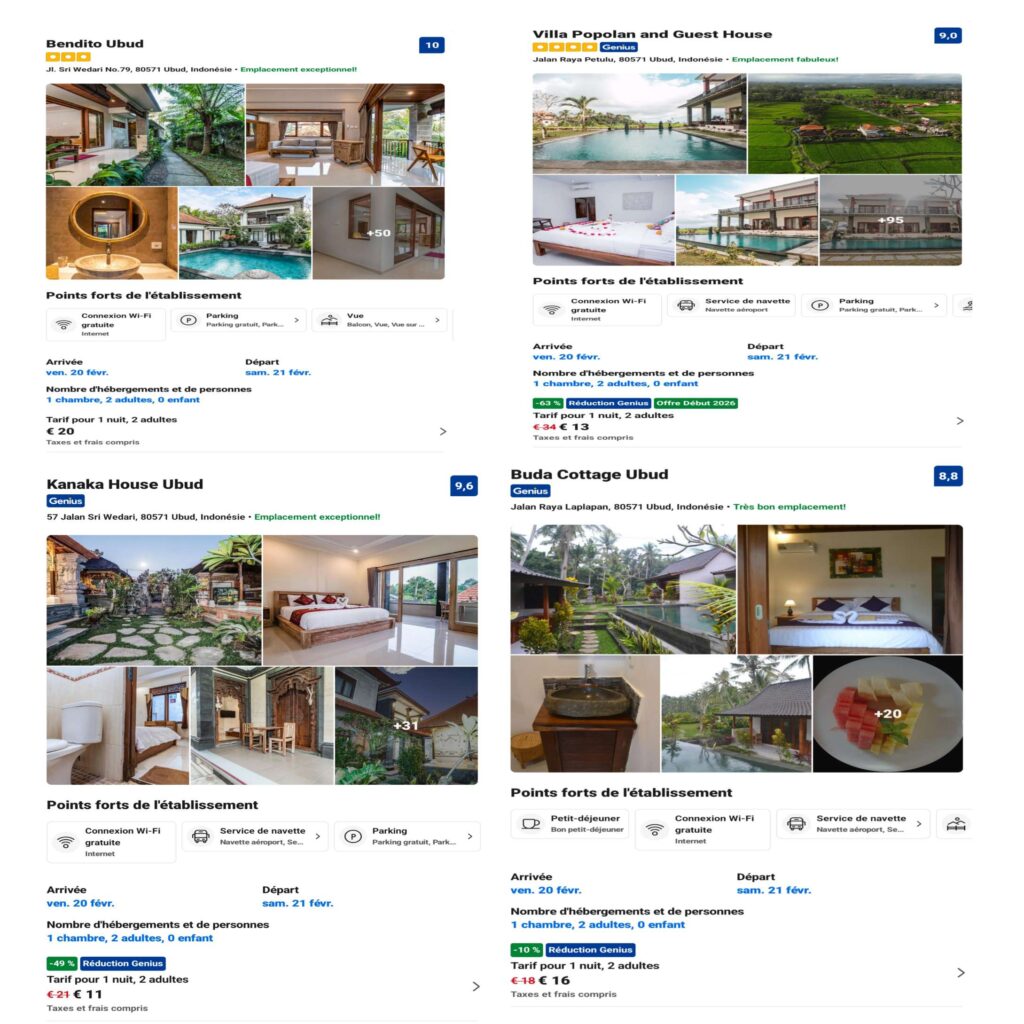
The platforms I use (in order of preference)
1. Booking.com — My main recommendation
✅ No hidden fees
✅ Clear, smooth interface
✅ Hard to find cheaper for short stays
❌ No advantage for long-term rentals (most of the time)
This is my main platform. Simple, reliable, efficient.
2. Agoda — A useful complement
✅ Sometimes better prices than Booking
❌ Decent interface, but more confusing
❌ A few hidden fees
Good for: comparing against Booking
3. Airbnb — Occasional
✅ Quality places you can’t always find elsewhere
❌ 20-30% more expensive than local rates
Good for: your first month, or specific locations
A good platform, but not my priority for long stays.
4. Local Facebook groups
✅ Local prices, direct contact with owners
❌ Less secure, you need to be there in person
Good for: months 2-6 (once you’re settled)
My recommendation: join the Facebook groups 2 to 3 months before you leave. A lot of information gets shared there, and you can ask as many questions as you like on any subject.
5. Local word of mouth
✅ Best prices, trust
❌ Requires a local network
Good for: the long term
My approach (field-tested)
Month 1: Booking.com for 2-3 days → if the place suits me, I extend on the spot.
Risk of overbooking? Low. I’d rather keep that flexibility than commit to a month in a place I don’t know.
Important tip: I rarely book more than 2-3 days at the start. It avoids bad surprises. I’d rather extend if the place works out.
Month 2 onwards: contact the owner directly → negotiate a monthly price (-20% to -40%) → pay cash or by bank transfer.
Negotiating a monthly price
Strategy:
- Get in touch after one night: “I’m staying 2-3 months, what’s your direct price?”
- Offer to pay cash or by direct transfer (avoids platform commissions)
- Offer rent up front (1-2 months) = serious leverage
Typical discount: 20-40% off the Booking/Airbnb price
A concrete example:
Booking: €25/night x 30 days = €750
Direct negotiation: €500/month
Saving: -33%
What to look for over 6 months
Essentials:
✅ Reliable internet (if you work remotely)
✅ A kitchen (saves money + independence)
✅ Quiet (sleep comes first)
Important:
✅ Close to nature/beach/mountains (depending on what you’re after)
✅ Scooter/bicycle available (mobility) — scooters cost money, bicycles are sometimes free
✅ Laundry possible (machine or service)
✅ Air conditioning (depending on season and location — essential in hot, humid areas)
Secondary:
Pool, general standard
My number one criterion: quiet, with nature within walking distance. Everything else adapts.
Transport: renting a scooter
Budget: €60-100/month (+ €20-30 for fuel)
Important tip (learned on the ground):
Always see and test the scooter BEFORE signing — especially for a long-term rental.
I ended up with a scooter whose handlebars wobbled dangerously. It was swapped easily the next day, but I could have avoided the whole thing.
Quick checklist:
✅ Brakes work
✅ No shaking or pulling in the handlebars
✅ Decent tyres (not bald)
✅ Lights/indicators OK
✅ Ride 500m to test it (don’t just look at it)
✅ Film the scooter (a full video is proof of its real condition before the rental)
For a monthly rental: negotiate a 1-2 day trial before committing to a full month.
07Daily life: what do the days actually look like?
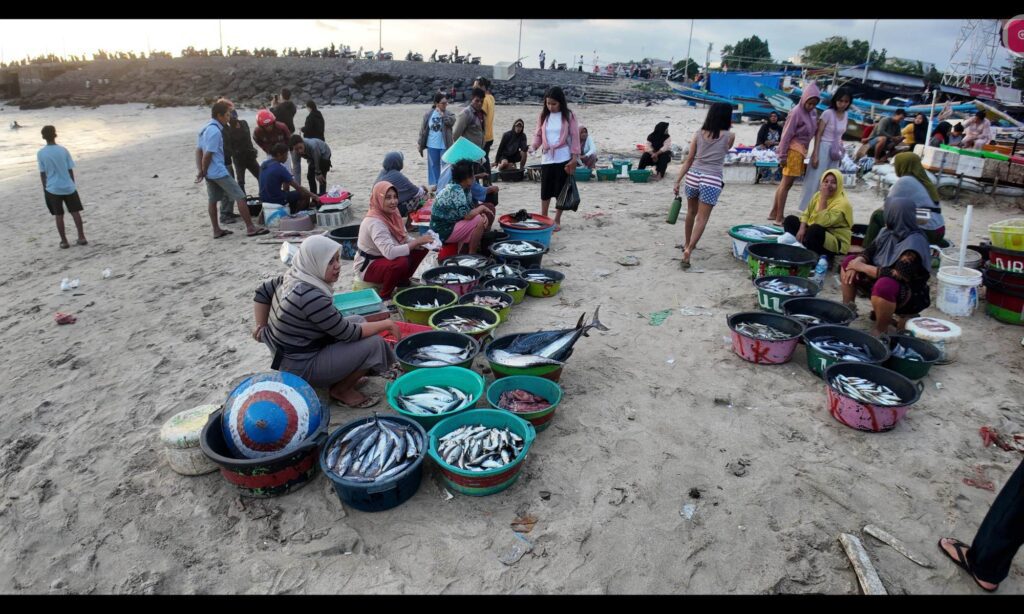
A typical rhythm (my own)
Morning:
6-7am: Waking up naturally (no alarm)
7-9am: Walking/exercise/sunrise
9am-12pm: Work/writing for the blog
Midday:
12-1pm: Lunch at a local warung (€3-5)
1-2pm: Nap/reading
Afternoon:
2-5pm: Exploring (scooter, walking, the beach)
5-6pm: Quiet time (reading, thinking)
Evening:
6-7pm: Dinner
7-9pm: Writing/projects
9-10pm: Bed (natural rhythm)
An important note:
This rhythm isn’t a straitjacket. I break it often (travel, whatever I feel like that day, an unexpected encounter).
But it gives me something to hold on to when I need it — without a minimum of structure, the days blur together and the momentum drains away.
What changes compared to home
Fewer demands on your attention.
No meetings, no imposed social obligations, no external rhythm.
A slower pace.
Time stretches out. The days are long, but not empty.
More time for yourself.
Reading, thinking, personal projects. Mental space opens up.
Solitude is more present.
Not always easy. Sometimes heavy. But always enriching too.
The daily challenges
Solitude
Real, especially outside tourist areas.
You need to go out to see people (which costs money and energy). Finding the balance between solitude and company takes constant adjustment.
Language
Basic English is enough in tourist areas (“nasi goreng, no have” — you get the essentials).
Learning the basics of the local language = respect + connection.
Google Translate is a lifesaver in some areas (less touristy places, the countryside).
Health
Regular small complaints (digestion, bites, tiredness).
Pharmacies are well stocked. Hospitals are decent in the larger cities.
Nothing serious as a rule, but it calls for vigilance.
Routine
You need to rebuild a structure (otherwise you drift).
Regular exercise = an anchor. Projects (the blog, writing) = meaning.
Without structure, the days blur together. The momentum drains away.
What surprises you (the good)
How easily you adapt (simpler than expected)
The local welcome (genuine, warm)
Quality of life (nature, quiet, pace)
Cost of living (comfort is possible on an average budget)
What surprises you (the hard part)
Solitude is very much there
You need a regular dose of Western comfort (pizza, coffee…)
A subtle tiredness (from adapting all the time)
What I wish someone had told me beforehand
People talk a lot about freedom, sunshine and the cost of living. Far less about what wears you down.
After a few weeks, the “trip” feeling is gone. You’re left with yourself, without constant distraction.
Solitude isn’t an abstract idea. It’s concrete. Some days you have no real interaction at all.
The tiredness is strange. Not physical. Mental. It comes from having to handle everything, all the time: accommodation, getting around, decisions, adapting.
And above all, there’s no magical transformation.
You don’t become someone else by changing country. You change the setting. The rest, you bring along with you.
Which is exactly what makes the experience worth having.
08Pitfalls to avoid
Pitfall #1: Staying in tourist mode
Symptom: One activity, sight or restaurant after another (though why not, if you’re aware of it)
Consequence: Exhaustion, budget blown
Solution: Genuinely settle in, build a local routine
Pitfall #2: Cutting yourself off completely
Symptom: No social contact for weeks
Consequence: Low mood, loss of meaning
Solution: Join a community (sport, events, activities)
Pitfall #3: Underestimating the budget
Symptom: Planning for €800, spending €1,500
Consequence: Financial stress, a forced return home
Solution: Build in a 30-40% safety margin
Pitfall #4: Staying too long in the same place
Symptom: Weariness after 3-4 months
Consequence: Loss of enthusiasm
Solution: Move on every 2 months (or whenever it feels right)
Pitfall #5: Neglecting your health
Symptom: Putting off treatment, ignoring the signals
Consequence: An avoidable serious problem
Solution: See someone as soon as you’re in doubt, and get good insurance
Pitfall #6: Idealising the experience
Symptom: Expecting a “magical transformation”
Consequence: Disappointment when reality doesn’t match the dream
Solution: Accept the highs and lows, stay clear-headed
09Working remotely (optional)
If you work remotely/freelance
Internet
Speed needed: 10-20 Mbps minimum
Backup: local 4G SIM (backup)
Test it before renting a place
Time difference
France = +6h or +7h (depending on country)
Morning in Asia = afternoon in France
Adjust if needed.
Legal framework
Tourist visa ≠ work visa
Working remotely for a French company = gray area
Check the rules depending on the country.
Coworking
Bali/Chiang Mai: many spaces
Lombok: nonexistent in places, a few spaces in touristy areas (Kuta, Senggigi)
My case
No remote job with an employer.
Personal work (blog, projects). Flexible hours. Internet matters a lot.
10Is this for you?
6 months in Asia is for you if:
✅ You want to test another way of living
✅ You have a budget of €800-1500/month available
✅ You can handle (or even enjoy) solitude (easily worked around)
✅ You’re OK with occasional discomfort
✅ You have professional flexibility (or a break)
✅ You want to step out of the Western daily grind
It’s probably not for you if:
❌ You’re looking for a restful vacation
❌ You need constant Western comfort
❌ You don’t handle solitude well
❌ You have fixed professional/personal obligations
❌ Tight budget (risk of constant stress)
My honest opinion
Leaving for 6 months is neither running away nor a miracle solution.
It’s an experience. A test. An exploration.
It doesn’t solve inner problems. It doesn’t create a magic transformation.
But it offers space. A breath of air. A chance to see things differently.
For me, it confirmed a hunch: I can live elsewhere, differently. Not perfectly, not always easily, but really.
If you’re hesitating, that’s normal. Hesitation is part of the path.
➡️ Read: “How to Know When Hesitation Becomes a Real Calling”
11FAQ — Leaving for 6 months in Asia
What’s the minimum budget to leave for 6 months in Asia?
€800/month is the recommended minimum for a comfort/freedom balance: decent accommodation (€400), mixed local/restaurant food (€250), mobility (€100), outings (€50).
€500/month is still possible if you stay put without moving around much, cook or eat local, and favor walking or biking. It’s a minimalist lifestyle, not survival, but viable if well organized: accommodation €250-350, local markets, free activities.
Is it dangerous to live in Southeast Asia?
Generally not, with basic precautions: mandatory health/repatriation insurance, road caution (scooters = the real #1 risk), avoiding risky areas (rare), respecting local customs. Indonesia, Thailand, the Philippines are safe destinations for long-term stays.
Can you go without speaking English?
Yes, but daily difficulties increase: accommodation, transport, admin, negotiating, technical issues. Basic English is the recommended minimum. Without English, loneliness is more pronounced (limited interactions).
Can you work remotely on a tourist visa?
Legal gray area. In practice, many nomads work remotely. Prerequisites: stable connection (check before renting), manageable time difference (European clients), discretion. Bali, Chiang Mai = established digital nomad hubs, suitable infrastructure.
Conclusion
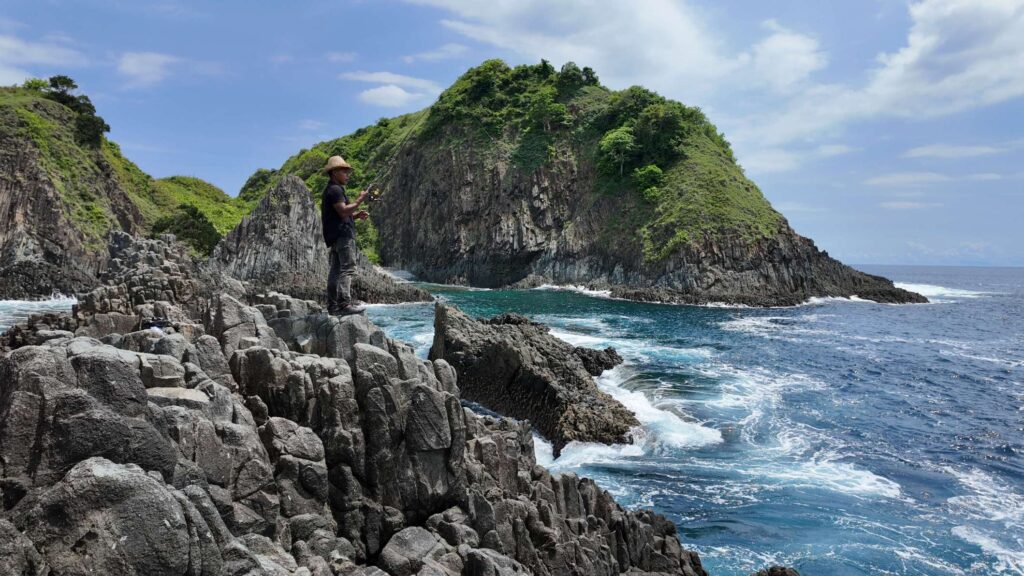
It’s about learning to inhabit a place, day after day.
Leaving for 6 months in Asia isn’t heroic.
It’s not that complicated logistically.
It’s not that expensive financially.
But it’s not trivial either.
It means accepting to step out of a familiar rhythm. Testing a temporarily different life. Watching what that does inside you.
For my part, I’m on the path. This blog documents what I’m learning — what works as much as what falls short.
If this resonates with you, if you’re considering this experience too, or if you have specific questions, feel free to leave a comment. I reply to all of them.
And if you want to follow my journey in real time — the adjustments, the places tested, the discoveries, the struggles — subscribe to the newsletter. I share what’s behind the scenes, not just the photos. (see the end of this article)
And what about you, what’s really holding you back? Not the logistics. The real thing.
The way forward becomes clear as you walk it.
To go further
➡️ Understand my approach: Another Way to Talk About Autonomy
➡️ Transition articles: Vision & Foundations
➡️ Follow my journey: My Challenge: Six Months to Live Freely
➡️ Go deeper on this topic: Money & Freedom
Transparency note (affiliation)
This article contains affiliate links to Wise and Revolut. If you sign up through these links, I earn a small commission at no extra cost to you. I only recommend tools I actually use.
Leave a Reply