
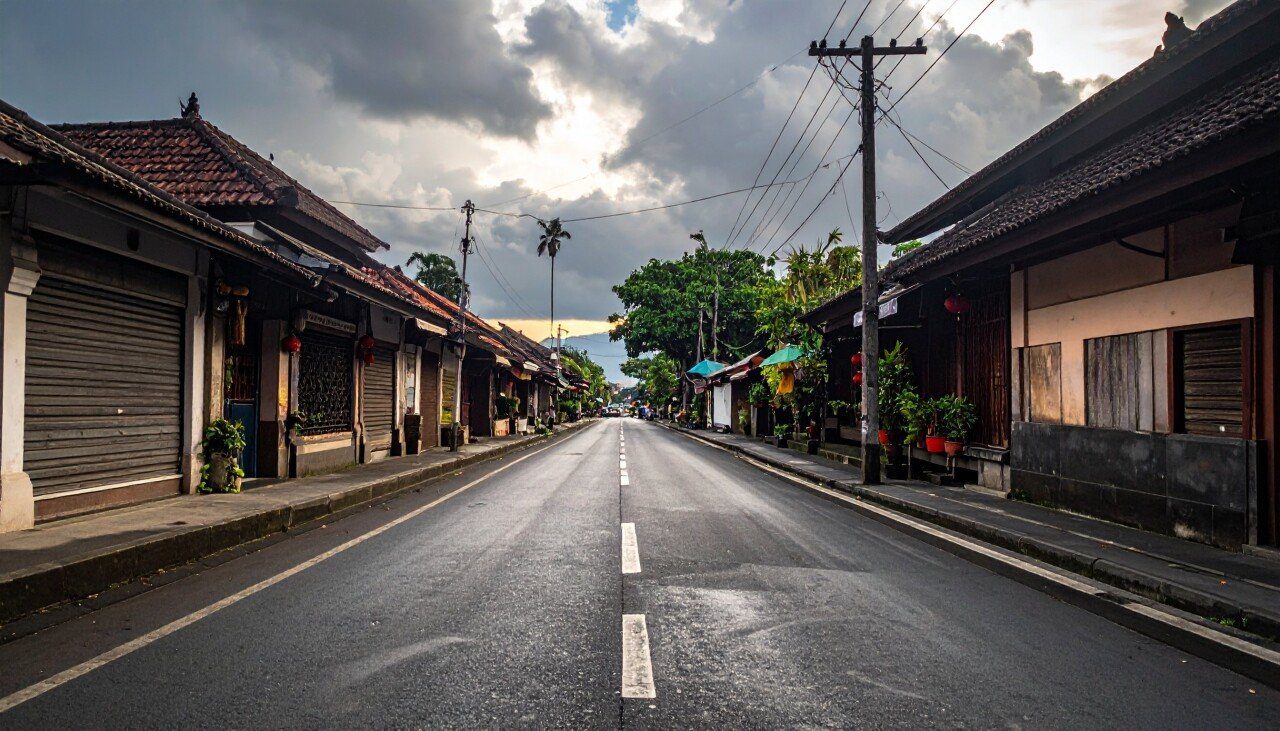
On March 8, 2027, Bali enters complete silence for twenty-four hours. Empty streets, closed shops, the airport at a standstill. An entire island coming to a stop by common agreement.
This is Nyepi — Bali’s Day of Silence, the Hindu New Year according to the Saka calendar.
A useful clarification right away: Balinese Hinduism is very different from Indian Hinduism. Developed in near-isolation over centuries, blended with local animist traditions and ancestor worship, it has its own deities, its own rituals, its own notion of the sacred. Nyepi doesn’t exist anywhere in India. It’s a distinctly Balinese celebration.
The evening before, giant monster sculptures parade through the streets to the sound of drums. These are the Ogoh-Ogoh: creations carried at arm’s length by dozens of young people, in an atmosphere that’s both festive and ritual.
I experienced Nyepi 2026 in Sanur. This guide is built from that experience — with what I saw, felt, and a few discoveries I hadn’t anticipated.
FIELD ACCOUNT
To get a sense of what Nyepi actually feels like, read the account written from the experience in Bali.
QUICK TAKEAWAYS
- Nyepi Bali 2027: March 8, 2027
- 24 hours of total silence — from 6 a.m. to 6 a.m. the next day
- Airport closed all day
- No going out in the street
- Mobile data cut off (wired wifi still works)
- Well organized in advance = a simple, memorable experience
FIND YOUR WAY
Go straight to
The 2027 date is confirmed; transport and connectivity arrangements are worth re-checking before the trip.
🟨 Nyepi Bali 2027: exact date and calendar
Nyepi falls on a different date each year, calculated according to the Balinese Hindu lunar calendar. Ceremonies stretch over several days around the central date. For 2027, plan for the period from March 6 to 9 if you want to experience it all.
Nyepi 2027: March 8, 2027
| Year | Nyepi date |
|---|---|
| 2026 | March 19 |
| 2027 | March 8 |
| 2028 | March 26 |
The date of 8 March 2027 appears in the BMKG 2027 Almanac, published by the Indonesian public weather agency.
🟦 What is Nyepi? A unique case in the world
Nyepi is the Balinese Hindu New Year. But unlike every other New Year celebration in the world, this one isn’t celebrated with noise and light.
It’s celebrated in silence.
For exactly 24 hours — from 6 a.m. to 6 a.m. the next day — the whole island stops. Streets empty out. The airport closes. Shops pull down their shutters. Mobile data is cut off by the carriers (wired wifi keeps working — I was able to confirm this from my homestay).
Nyepi’s 4 rules
Nyepi rests on four traditional prohibitions, applying to the whole island — Balinese and visitors alike:
No fire, no light visible from outside — No work — No moving about in the street — No entertainment
Why this silence?
Tradition holds that Bali, plunged into darkness and silence, appears deserted to the evil spirits arriving with the New Year. Convinced the island is uninhabited, they leave without causing harm. It’s a form of collective purification, both spiritual and communal.
What I take away from it
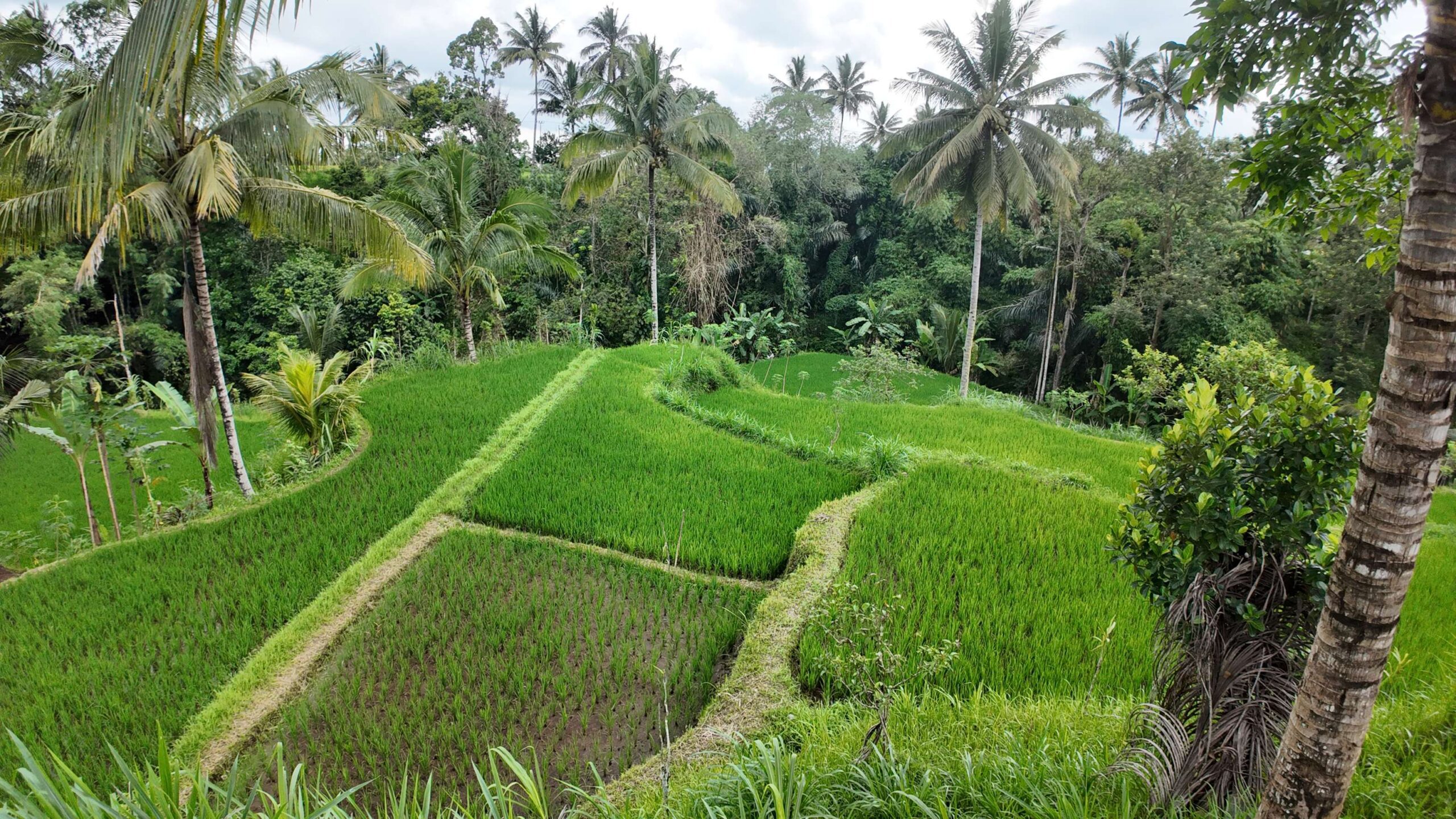
I was staying in a family homestay in Sanur — a place I know well and come back to regularly. Green surroundings, warm, naturally calm. Balinese people have this particular care for gardens: everything grows easily here, and they use it to create spaces surrounded by greenery and flowers.
What struck me most was how the Balinese live their traditions. With absolute seriousness, total commitment — and yet, no pressure, no proselytizing toward foreigners. It’s just part of their life. It’s simple and light.
A paradoxical result: since I was already somewhere naturally quiet, I didn’t really notice a difference during Nyepi. No sudden, striking silence — more a continuation of that usual calm. I imagine the experience is radically different in Canggu, where the bustle and traffic are constant the rest of the year.
Worth noting, contrary to what you sometimes read: there was no power outage where I was. Electricity worked normally all day.
🟦 Understanding Bali: a different relationship with the visible and the invisible
This section isn’t meant to help you plan your trip.
It helps you understand the symbolic side of Nyepi.
Two details I noticed in this homestay struck me in particular.
When family members come back from outside, they go through the kitchen first before entering the other rooms. The kitchen is the most “earthly” space in the house. The idea is that negative energies brought back from outside stay there. Once you’ve passed through, you enter the rest of the house carrying something cleaner. It’s discreet, almost invisible — and it says a lot about how the Balinese inhabit their space.
Another detail: a small light stays on at night, often in the bathroom, the toilet, or outside. The leak — evil creatures from Balinese folklore — are said to like total darkness. A small nightlight is enough to keep them away. This isn’t superstition trotted out for tourists. It’s their everyday life.
These gestures are part of something bigger: the Balinese worldview rests on a constant balance with the invisible world. That balance is negotiated daily — in the offerings placed out each morning, in the way you enter a room, in the silence of an entire day. Nyepi is its most spectacular expression. But not the only one.
🟦 The Ogoh-Ogoh: the monster parades the evening before Nyepi
What are the Ogoh-Ogoh?
The Ogoh-Ogoh are giant sculptures representing demons and creatures from Balinese Hindu mythology. They can reach 2 to 8 meters tall, built from bamboo, papier-mâché, fabric, and foam by the young people of each banjar (neighborhood).
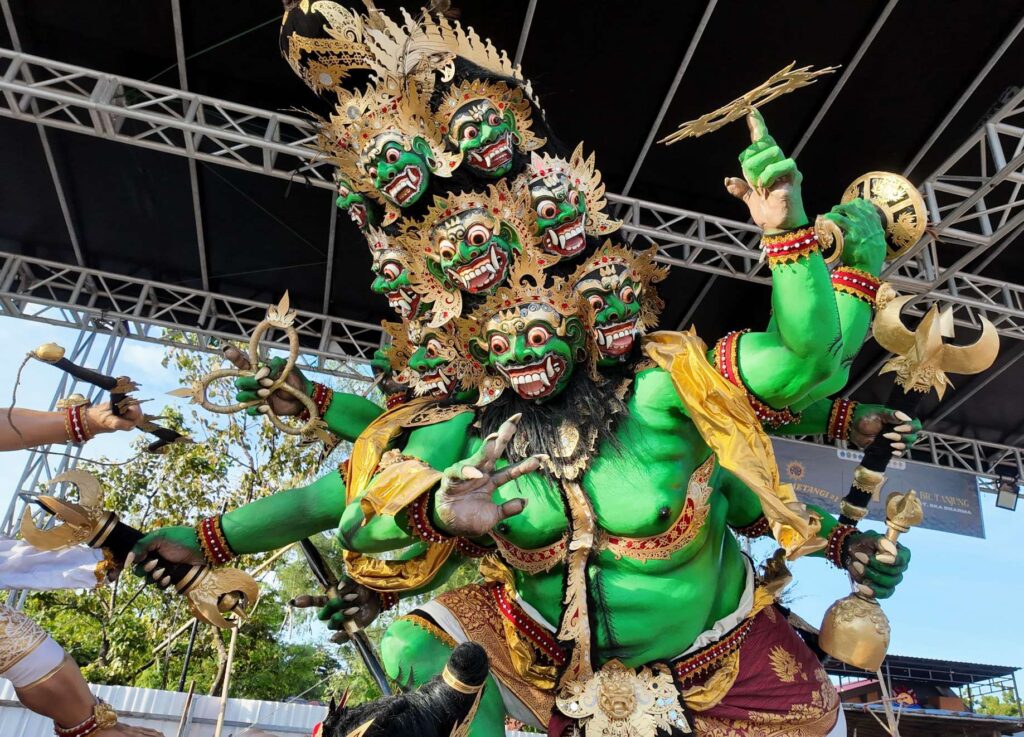
Each banjar creates its own sculpture. It’s a collective project involving weeks of work, and it leads to real competition between villages.
The competition before the parade — what few guides mention
In Sanur, I discovered a side of this I didn’t know about: a few weeks before Nyepi, an official selection is held.
For the 2026 Sanur Festival, it took place on Mertasari beach. 27 Ogoh-Ogoh were presented in front of a jury of 5 members from outside Sanur — a way of ensuring impartiality. The 20 best sculptures were selected for the main parade.
The atmosphere was both festive and serious. Festive because it’s a public event, with food stalls, a lively local-market feel. Serious because it’s a real competition — groups present their sculpture and stage performance in front of the judges, participants wear beautifully crafted costumes, and community pride is genuinely at stake.
Personally, I found this selection event just as interesting as the parade itself — maybe more, because it takes place in an open space that lets you observe each sculpture up close.
The main parade
The evening before Nyepi, the streets are buzzing.
People rush through their last errands — the next day, everything will be closed from 6 a.m. Some streets start getting blocked off. You pass participants already in spectacular costumes and makeup, heading to join their groups by scooter, instruments in hand. Kids of 6 or 7, accompanied by adults, get ready to help carry the statues.
The parade starts in the late afternoon, around 4-5 p.m. The Ogoh-Ogoh are carried through the streets on large bamboo frames, accompanied by drums, shouts, and music. The idea is to make as much noise as possible — to chase away evil spirits before the following day’s silence.
The show isn’t limited to street processions: there are also theatrical performances in certain dedicated spaces. It’s richer than a simple parade.
Regarding the burning of the statues late at night: it’s no longer practiced in urban areas, for safety reasons. In Sanur, the sculptures are usually recovered, restored, and kept for the following year. In some more remote villages, the bonfire tradition is still maintained — and that could be the subject of a future visit for me.
Where to see the Ogoh-Ogoh in Bali?
| Place | Atmosphere | Accessibility |
|---|---|---|
| Sanur | Family-friendly, well organized, official competition | Very easy |
| Ubud | Artistic, very elaborate sculptures | Easy |
| Denpasar | Massive, impressive | Easy |
| Seminyak / Canggu | Festive, international atmosphere | Easy |
| Traditional villages | Authentic, burning sometimes still practiced | Takes a bit of research |
🟧 Day of Silence rules — what’s really forbidden
What’s forbidden during the 24 hours
- ❌ Going out in the street
- ❌ Turning on lights visible from outside
- ❌ Making noise
- ❌ Relying on mobile data during the twenty-four hours (cut off by carriers — wired wifi keeps working)
- ❌ Booking a flight on the day of Nyepi (airport closed all day)
What it actually looks like
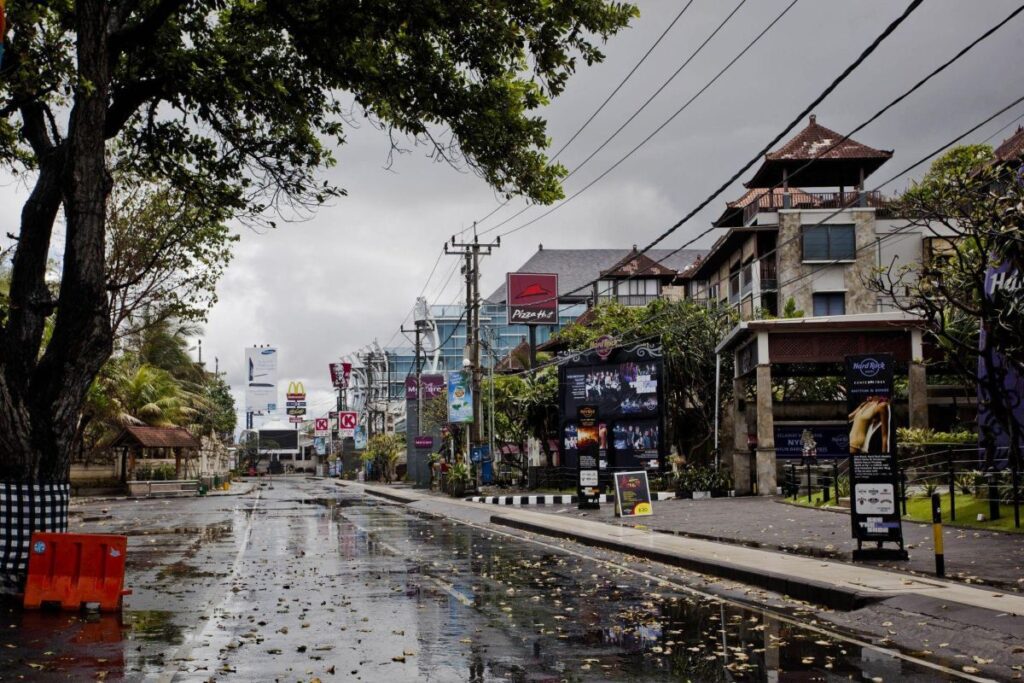
At my homestay, the instructions were simple: in the evening, don’t turn on lights outside the room, close the curtains. That’s it.
My hosts had arranged breakfast and dinner for residents — a homemade nasi goreng for the evening. I’d bought groceries the day before and cooked a very French ratatouille during the day. We talked, read a bit, took our time. It was a quiet day, not a constrained one.
In reality, if you know Nyepi is coming and organize accordingly, there’s nothing complicated about it. The “constraint” isn’t really one if you anticipate it.
The traditional police: the Pecalang
Patrols of Pecalang — the traditional Balinese neighborhood police — roam the streets all day to make sure the rules are followed.
In case of a violation: a warning, a possible fine. In serious cases, things can go much further.
A recent case illustrates this well. In 2026, a Swiss tourist went out into the streets during Nyepi, convinced he was defending individual freedom. He filmed himself walking through deserted Bali, made insulting comments about the tradition while narrating, and posted it all on Instagram. The videos went viral. Bali’s police cyber unit identified his account and tracked him down. The Denpasar court sentenced him to one year in prison on 20 August 2026.
It wasn’t so much the act of going outside that triggered the arrest. It was the insulting public post, shared on social media, that was treated as a religious insult.
The story says it all: Nyepi isn’t a tourist convention. It’s a sacred day for an entire island.
🟩 Should you plan your trip around Nyepi?
That’s the real practical question — and the answer depends entirely on what you’re here for.
If you’re here for the beaches, temples, and excursions: Nyepi blocks off one full day, and the airport on March 8. Just plan your arrival and departure dates around it. A still day in decent accommodation isn’t a loss — it’s an experience in its own right.
If you’re here to experience Nyepi: plan to arrive at least two days before so you don’t miss the Ogoh-Ogoh on March 7. And stay until March 9 to watch Bali gradually come back to life.
What I observed about prices: contrary to what you might think, demand doesn’t rise during Nyepi. Many tourists deliberately avoid this period. In Sanur, I saw hotel promotions to attract guests — not inflated rates.
🟩 How to prepare for Nyepi 2027
Choosing your accommodation
Family homestay: the most immersive option. You experience Nyepi with a Balinese family, understanding from the inside what it means to them. Hosts often arrange meals for residents — worth confirming in advance.
Hotel or resort: guaranteed comfort, meals organized, no surprises.
Private villa: more freedom indoors, garden or pool available.
Shopping the day before
Shops close on the evening of March 7, sometimes in the afternoon. Plan for everything you need on March 6 or 7. Food, water. Nothing complicated — just don’t end up without supplies.
Planning your travel dates
Bali’s airport is closed all day on March 8, 2027.
⚠️ Arrival: by March 7 at the latest Departure: March 9 at the earliest Absolutely avoid booking a flight on March 8
🟩 Real budget for Nyepi in Bali
My personal budget for the days around Nyepi 2026 in Sanur:
| Item | My real cost |
|---|---|
| Market/supermarket shopping (day before Nyepi) | ~€12 (200,000 IDR) — enough for 2 meals |
| Breakfast + dinner on Nyepi | Provided by the homestay |
| Ogoh-Ogoh parade | Free |
| Accommodation | Varies by property |
The fact that the homestay offers meals isn’t universal — check in advance.
| Type | Night of Nyepi | 3-day budget |
|---|---|---|
| Homestay / budget | €10-25 | €50-80 |
| Mid-range hotel | €35-70 | €120-200 |
| Resort | €100-200 | €300-500 |
🟩 Typical schedule around Nyepi (March 6-9, 2027)
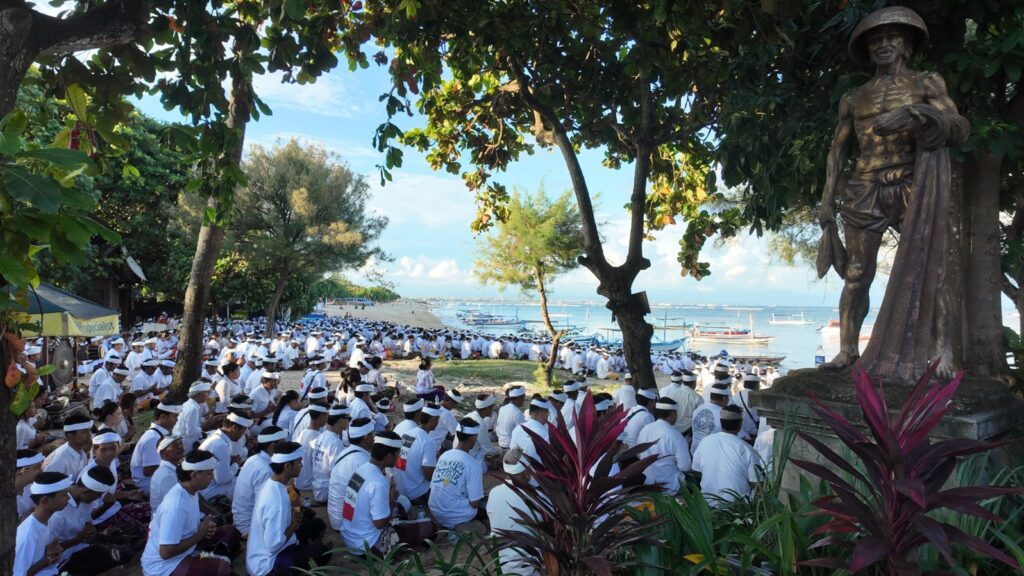
March 6 — Melasti The Melasti processions take place in the days before Nyepi. Balinese people walk in procession to the ocean to purify the sacred objects from the temples. Traditional costumes, offerings, music — it’s visually striking and accessible to respectful visitors.
March 7 — Ogoh-Ogoh The day is busy: last-minute errands, groups getting ready, streets starting to transform. From 4-5 p.m., the parades set off. The evening is spent between street processions and theatrical performances in dedicated spaces.
March 8 — Nyepi 6 a.m. Silence. Everything stops until 6 a.m. the next day. You stay in your accommodation. A day apart — different depending on where you are and who you’re with.
March 9 — Back to life Life gradually picks back up. It’s also a period of spiritual purification through bathing in the ocean. If you spend time at the beach that day, you’ll notice a stronger-than-usual presence in the water.
🟩 What to do during Nyepi?
This question comes up often — as if it could be intimidating.
In a way, it’s an invitation this blog knows well: step back, observe, let things settle before moving on.
If you’re in a homestay, it’s a rare chance to spend time with a Balinese family, ask questions about what this day means to them, and understand from the inside how this tradition can be lived with such ease and serenity.
If you’re in a hotel or villa, it might be the only day of your trip when you have absolutely nothing to do, nothing to visit, nowhere to go. Some find that uncomfortable. Others see something quite precious in it.
Ask your hosts questions. Show that you’re interested. It’s often the opening to conversations you wouldn’t otherwise have.
🟦 FAQ — Nyepi in Bali: frequently asked questions
Can you leave your accommodation during Nyepi? No. The ban on being in the street is total for the full 24 hours, from 6 a.m. to 6 a.m. It applies to Balinese and visitors alike.
Does the internet work during Nyepi? Wired wifi works normally. Mobile data (4G/5G) is cut off by Indonesian carriers for the entire duration of Nyepi.
Is Bali’s airport really closed? Yes. Ngurah Rai Airport is closed all day on March 8, 2027. No flights take off or land.
Are there power outages? Not always. In Sanur, electricity worked normally all day — contrary to what you sometimes read. But each place, each family, each property may have its own practices on this. Check with your accommodation before the day itself.
What happens if you don’t follow the rules? The Pecalang (traditional Balinese police) patrol all day. A warning, a fine, and in serious cases — especially public provocation on social media — arrest and criminal charges.
Should you book accommodation very early? Not necessarily. Tourist numbers drop during Nyepi, with many travelers avoiding this period. Some properties even offer promotions. Worth checking depending on the area and type of accommodation.
🟩 Conclusion
Nyepi isn’t really a constraint. It’s a day apart, which just needs a bit of planning beforehand. If you know it’s coming, if you plan your shopping and accommodation — it’s a beautiful, peaceful, and rare experience.
The Ogoh-Ogoh parade the evening before remains one of the most striking things I’ve seen in Bali. The Mertasari selection in Sanur, a few weeks earlier, impressed me just as much as the parade itself.
The silence the next day takes on a different color depending on where you are. In Sanur, in a green homestay, it was a day like any other — just quieter. In a normally bustling place, I imagine the effect is far more striking.
Both are worth experiencing.
Leave a Reply