
Nyepi — the Day of Silence
Some cultures understood something we have lost.
A way of moving through chaos without fighting it. Of releasing unrest without amplifying it. Bali turned it into an annual ritual. And that ritual says something about our times.
IN PRACTICE
To prepare for the day itself — the dates, the rules and what I observed on the ground:
Nyepi Bali 2027: a practical guide to the Day of SilenceRead the guide →
LISTEN
Listen to this article in audio
This text also exists in audio form, in the first episode of Vivre Librement — Audio Journals.
A first attempt, still imperfect perhaps, but true to the spirit of the blog: experiment, adjust, move forward.
When the inside changes before everything elseRead the reflection →
THE TURMOIL
Giving unrest a shape
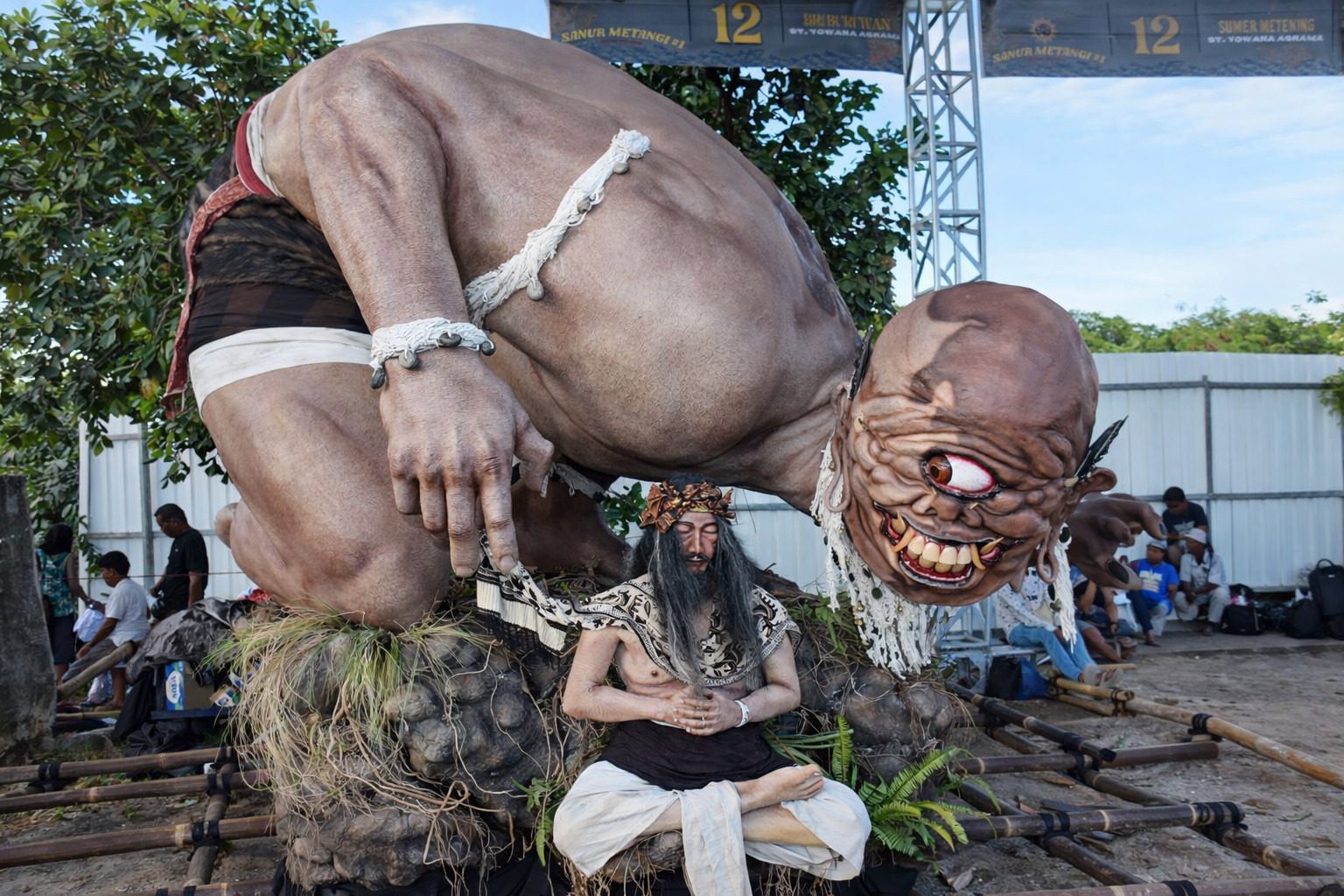
In Bali, once a year, on the eve of Nyepi, people build monsters. They’re called ogoh-ogoh.
Huge, grotesque figures, carried through the streets to the sound of drums and cymbals. What they embody isn’t really supernatural — it’s familiar. What stirs, gnaws, and parasitizes us. What moves through the air without ever being grasped.
It is brought out. Given a shape. Shaken to excess. Then burned.
THE SILENCE
Making it inaccessible
The next day, the island stops. Complete silence. Airport closed, streets empty, strict ban on going outside. No entertainment, no traffic, no screens.
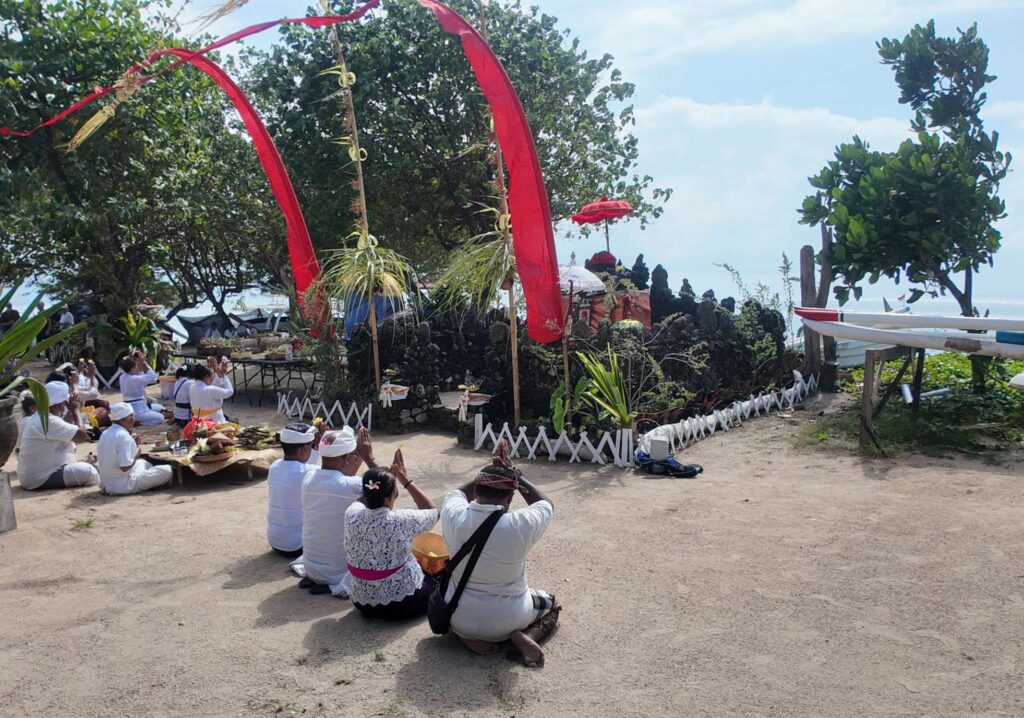
Tradition says the troubled forces return — and find nothing to hold onto. So they pass.
What strikes me about this ritual isn’t its exoticism. It’s its simple logic: first externalize, then starve it out. Don’t fight — make it inaccessible.
We do the opposite.
We accumulate unrest without ever naming it. We answer noise with more noise. Saturation with more stimulation.
When something overflows — individually, collectively — the response is almost always the same: speed up, produce, distract, or attack. War as policy. Agitation as proof of existence.
No one burns anything. No one stops.
The monsters, though, remain. And they feed.
Another way to talk about autonomyRead the reflection →
The Balinese approach is human before it is Hindu.
That day, it simply says that some things cannot be gotten through by running faster or fighting. That there is a kind of intelligence that only activates in stillness. That emptiness is not an absence — it is a condition.
TWO ISLANDS
The same search for balance
In Sumba, another Indonesian island, I find the same intuition through a radically different path.
Horsemen throw spears at each other, blood is spilled, the earth is fertilized by direct confrontation. No silence. Balance through impact.
Two islands. The same clear-eyed understanding of what it costs to do nothing.
Pasola: inside a spectacular ritual on the island of SumbaRead the account →
WHAT BEGINS
Crossing differently
Every culture found its own form.
In ours, it seems to have been lost. But something is rising. Millions of people, quietly, are beginning to search again — a different rhythm, a truer sense of meaning, a way of inhabiting their lives that doesn’t resemble the surrounding noise.
That quest may be the ritual of our time.
I don’t know if I should leave (and that’s normal)Read the reflection →
Hinduism calls this the Kali Yuga — the dark age, the age of chaos and confusion — before the dawn of a new golden age. Not a utopia. A crossing.
As after the ogoh-ogoh: first the turmoil, then the silence of Nyepi, or something new that can finally begin.
This episode is part of Vivre Librement — Audio Journals, a series of readings and spoken stories from the blog.
Leave a Reply