
This text opens up a part of the blog: hands-on gestures, being grounded, field techniques. But before talking about fire, water, camping or food, I needed to lay a clear foundation: what kind of self-reliance are we really talking about?
Not the fantasy kind. Not the survivalist-catalogue kind. Nor the disconnected, theoretical kind. But a livable, human, contextual, mobile self-reliance. A real-world self-reliance that starts here and now. An adaptive self-reliance.
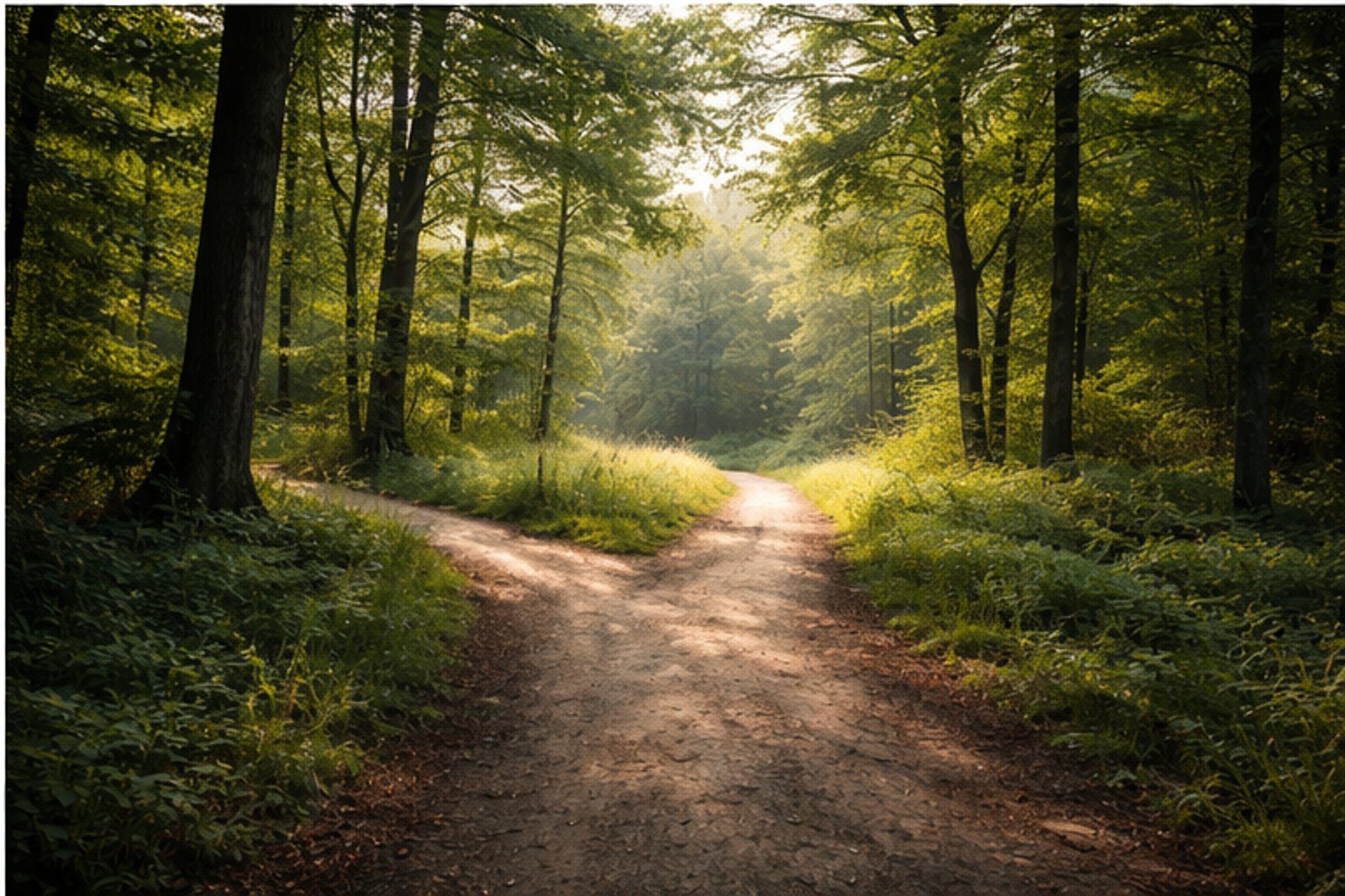
Find your way
The dream: an island, natural shelter, and the idea that you have nothing left to manage
For many people, self-reliance echoes a simple image: a deserted beach, a hammock between two trees, translucent sea, a few coconuts. Setting your bag down, breathing out, and owing nothing to anyone anymore. It’s the imagery of total letting go.
The fantasy rests on a powerful idea: that being in the right place would be enough to make everything simple. A natural life. A return to real things. This dream carries a healthy impulse, but it’s incomplete.
This vision is appealing because it answers a fundamental need: to breathe. To silence the noise. To slow down. To take back control. This dream reflects a legitimate human need, but it overlooks an essential reality: living outdoors requires logistics, reading the terrain, a real relationship with the place.
In my case, I travel with a laptop, a bit of electronic gear, and important documents. That adds constraints others don’t have. Everyone has their own definition of self-reliance, depending on their needs, tools, and priorities. A minimalist traveller won’t have the same approach as someone who also needs to work, create and share. And that’s perfectly fine.
The reality on the ground: moving around, backpack, weather and real limits
In a tropical setting, every detail matters. Sand gets in everywhere. Humidity corrodes things. A night by the sea means protecting your electronics, your papers, your bag. Self-reliance doesn’t mean carelessness. You don’t leave a bag containing a laptop, passport or camera to chance. Self-reliance is worthless if it puts what you can’t replace at risk.
Mosquitoes arrive at dusk. Dew soaks the fabric. The air turns heavy. A fire is often forbidden. Sleeping outside isn’t just laying a towel on the sand. It’s invisible logistics.
A beach rarely has drinking water. You have to carry it, purify it, plan ahead. And once every litre matters, the myth fades.
Gathering fruit? You need to know the trees, the season, the location. Fishing? That takes gear, technique, time. Making a fire? Sometimes forbidden, or inefficient.
In practice, living off the land while travelling requires an energy and a skill very few of us actually have. We’re neither seasoned fishermen nor rooted locals. The energy-to-result ratio is very poor if you’re aiming for true food self-reliance. But these gestures can become something else: rituals, pleasures, ways of connecting with nature. That’s where they find meaning again.
Relational self-reliance: the beach warung as a way in
In Indonesia, a warung is much more than a simple restaurant. It’s often a modest family-run place, open onto the beach or the roadside. You eat there for a few euros. You drink a coconut. You rest on beach beds covered by a parasol or a palm-leaf roof.
During the day, these beds are used by customers eating, resting, hanging around. But at night, they empty out. And that’s when I understood something.
Observe before asking
The first time, I didn’t ask anything. I just watched. I noticed those beach beds stayed there, covered, dry, protected. That the place wasn’t touristy. That the atmosphere was family-like, simple, relaxed. That the owner was often around, available, unhurried.
I drank a coconut. I chatted a little. Nothing forced. Just an ordinary conversation. And after a while, I simply asked the question:
“Can I sleep here tonight?”
The answer is rarely no.
Free, but not without an exchange
Sleeping under these conditions costs nothing — or almost nothing. No money changes hands directly. But an exchange happens anyway. You eat there. You drink there. You spend time there. You respect the place. You build a relationship.
This is a different kind of self-reliance. Not the survivalist who needs no one. But the explorer who works with the human fabric around them. Who fits in. Who asks. Who receives. Who gives back.
What this changes in my relationship with self-reliance
This observation transformed my perspective. The self-reliance I’m looking for isn’t radical. It isn’t survivalist. It’s relational. It rests on the ability to build connection, to understand a place, to ask with the right tone, to receive with gratitude.
I don’t need 30 kg of gear to be free. I need to know how to observe, talk, adapt. Self-reliance starts with this kind of lightness: travelling with little, but knowing how to work with what’s already there.
And what’s already there isn’t just nature. It’s also people, their places, their rhythms, their generosity. In Asia, talking, asking and being friendly is often enough. Self-reliance goes through relationship. It isn’t a withdrawal, but an understanding. Lombok, Bali outside the tourist zones, and other islands too, offer this possibility: connecting, sharing, improvising. The self-reliant explorer isn’t alone: they work with the human fabric around them.
I put this approach to the test during a long-term stay in Asia. Real budget, visas, logistics: I detailed the experience here.
The flexible option: combining a homestay with a night on the beach
A homestay is a room with a local family. It becomes a base. You leave your things there, you build a connection, you come back. This lets you travel light and at ease.
A water bottle. A sarong. Something long-sleeved. And that’s it. True wealth is mobility. One day in a room, another outside. It adapts to your energy, to the weather. It’s a fluid self-reliance.
Having the choice, that’s the key. Sleeping outside because you want to, not because you’re forced to. That’s where real freedom is born.
The thin line between real self-reliance and imagined survival
Some people leave with 30 kg of gear. They want to be ready for anything. But their bag becomes their prison. They can survive, but not move.
Water, shelter, food, climate, safety. These elements rarely all line up. Radical self-reliance is a rare case, not the norm.
Being self-reliant means choosing your dependencies.
For example, trusting a keeper with your bag, then coming back for it. It’s a humble, embodied, well-adapted self-reliance.
What this phase of observation teaches me
- Observe before acting. Watch where people sleep. Know the tides. Sense the atmosphere. Get familiar with it. That can take an hour or a week.
- Read the terrain. Every place has its own language. Understanding it is essential.
- Adjust to what’s there. You don’t force a place. You fit into it. You work with it.
- Make discovery an end in itself. Exploring is already living differently. Observing, listening, slowing down. Even without fire or shelter. Being there. Fully.
What if self-reliance weren’t a feat, but a way of living?
Real, complete self-reliance — where you depend on nothing and no one — is extremely hard to achieve. It requires rare skills: knowing how to fish, hunt, grow food, build, plan ahead. Most of us don’t have them. And that’s fine.
Because self-reliance can be something else. Not a status to reach. Not a performance to prove. But a way of life.
Self-reliance as an art: changing the intention, not just the gesture
Making a fire. Spending a night outside. Watching the stars. Gathering driftwood. Purifying water. These gestures can be experienced in two ways:
As a survivalist necessity
I have to do this to survive.
As a ritual, a pleasure, a form of connection
I choose to do this to connect with nature, to slow down, to be present.
That’s where everything changes. Self-reliance becomes a movement, not a status. An inner stance, not a checklist.
Three words for a philosophy
Lightness Travel with little. Lighten the bag, lighten the material dependencies.
Choice Sleep outside because you want to, not because you’re forced to. Having the choice is already being free.
Relationship Work with the place and its people. Ask, receive, give. Don’t impose yourself, don’t run away. Just be freely there.
This kind of self-reliance isn’t a distant ideal. It starts now. It starts with a shift in how you look at things.
Self-reliance starts here
Self-reliance starts well before the first fire or the first night outside. It starts the moment you decide to look at a place as it is, not as you’d like it to be. Where you accept working with it instead of forcing it. Where you understand that travelling light isn’t a deprivation, but a liberation.
The myth of total self-reliance is seductive. But it’s also paralysing. It traps us in the idea that you’d need to master everything to be free. And that’s false.
Adaptive self-reliance, the one I explore, rests on something else: the ability to adjust, to build connection, to choose your dependencies. It doesn’t promise absolute independence. It offers a better relationship with the essential.
The hands-on gestures — fire, water, temporary camping, minimal cooking — extend this vision on the same foundation: a human-scale self-reliance that works with reality instead of fighting it.
Because self-reliance isn’t a feat. It’s a way of living.
To go further
A mobile, contextual, modular self-reliance
Fire, water, temporary camping, minimal cooking, no-trace exploration: each gesture can extend this adaptive, human and free vision.
I lean instead towards a self-reliance that is mobile, contextual, modular. A self-reliance that doesn’t seek total independence, but a better relationship with the essential. Closer to freedom than to survival. More inspired than constrained.
Leave a Reply