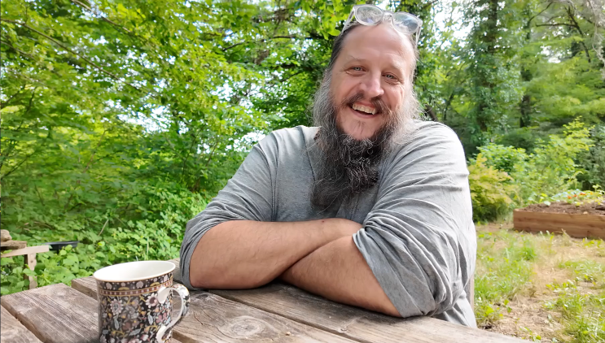
After 5 and a half years of walking — the scarcity, the cold, the backpack that was too heavy, but also the constant welcome, the generosity of strangers, the kindness of the road — Emmanuel tells us what it all taught him: that freedom doesn’t come from the absence of constraints.
I’ve known Emmanuel for many years.
He’s just come back from a 5-and-a-half-year pilgrimage, backpack on his shoulders, on a journey he himself describes as more spiritual than religious.
When he got back, I wanted to take the time to really listen to him. Not to turn him into a role model, nor to turn his walk into a heroic tale, but to let him tell what an experience like that can bring to a life.
We took the time for a filmed conversation, simple and direct — about what he lived on the road: hunger, cold, rain, the backpack that was too heavy, the things he gave up, the gifts he received, money that was hard to accept, fear, the body, solitude, and this freedom that doesn’t come from the absence of constraints.
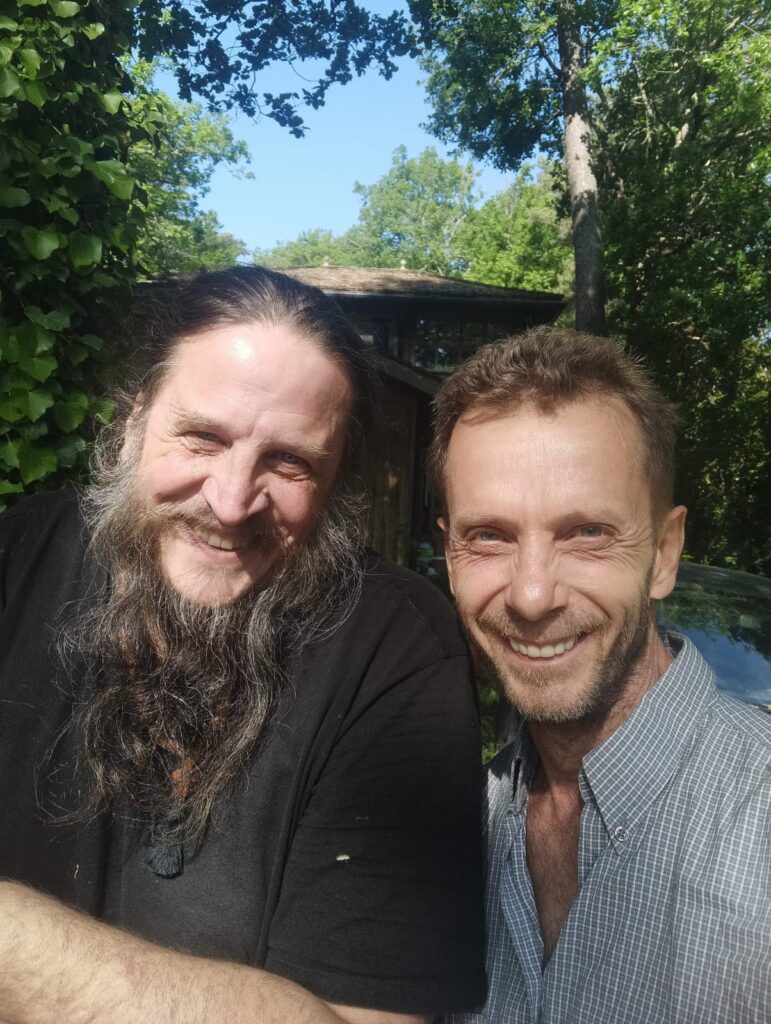
I’m not publishing this conversation as a method to follow. Walking for years, living outdoors, depending on the road, the body, chance encounters and the weather: this is a very particular form of inner search. This path belongs to Emmanuel.
What interests me here is letting what comes from his experience show through: learning to let go, to trust, to recognize one’s fears, to know how to receive (even money), to inhabit constraints differently, to accept what comes — and to understand that freedom isn’t only a matter of outer circumstances.
➡️🔴The interview also exists as a video here
➡️ 🎧 Also available as a podcast.
The conversation below covers its strongest moments, edited for smoother reading.
Emmanuel, can you introduce yourself briefly?
Emmanuel
My name is Emmanuel. I’m 52. I’ve been going on pilgrimages for quite a few years now, I’ve done many of them.
But this time, for once, I did a long-duration pilgrimage. I walked for 5 and a half years with my backpack, as a pilgrim.
What set you on the road in the first place?
Emmanuel
There are several things.
I started pilgrimages when I was young. The first time I went to India, for me, I was already on a pilgrimage. There was something very spiritual about that departure. I was going to see someone. I was looking for someone. And it was him I was going to see.
The 5-and-a-half-year pilgrimage started differently. I wanted to go to a monastery in southern Poland, in Częstochowa, to see the Black Madonna of Jasna Góra.
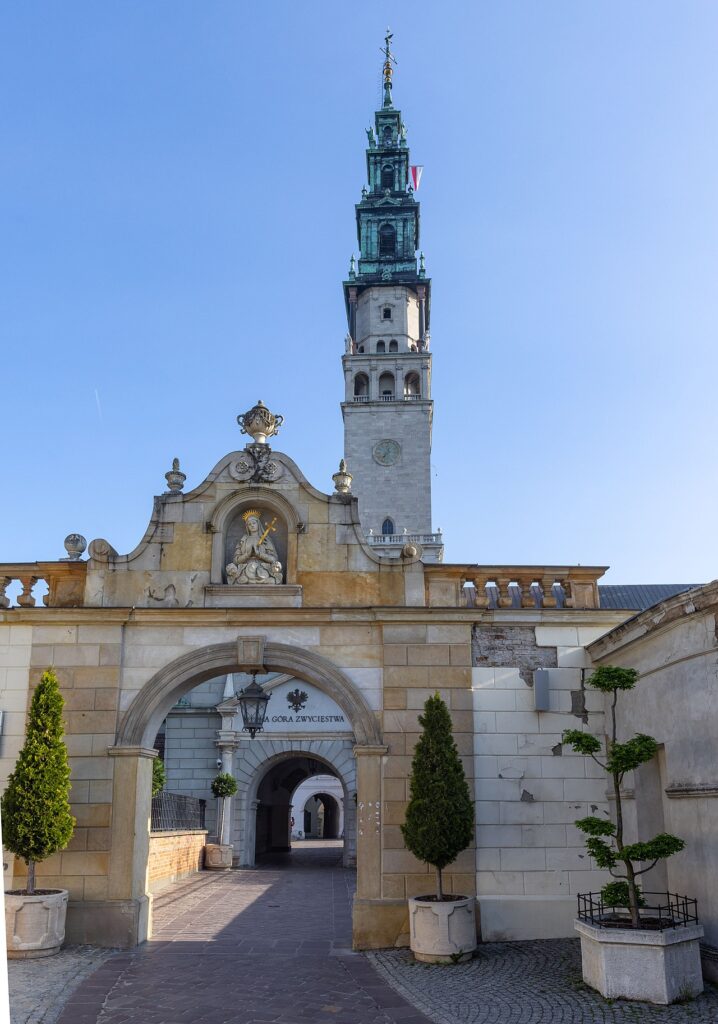
At first, I was meant to go there and back.
And then, on the road, the experience was so strong that I decided to extend it. I didn’t want to stop it. I wanted to keep going for as long as possible, because I think duration lets you sink even deeper into the experience.
When you walk for 5 and a half years, things change inside you. And with a bit of luck, they change for the better. And they stay. They become part of who you are.
What does an ordinary pilgrim’s day look like?
Emmanuel
An ordinary day is a morning where you leave with an idea of what it’s going to be, while expecting to abandon every plan you’ve made at any moment.
Because you’re heading into the unknown. A lot of things are going to change.
You can’t help making plans. You tell yourself: today I’ll go that far, I’ll stop there, I’ll see if I can buy supplies somewhere.
And in the end, it almost never happens the way you planned. The more precisely you plan, the less it happens as planned. But you can’t help making plans anyway.
So you have a general idea of what your day will be. And then you expect to drop that idea at the first bend in the road.
Basically, I’d wake up, pack my things in the tent, put on my backpack, get out of the tent, fold up the tent, and set off walking.
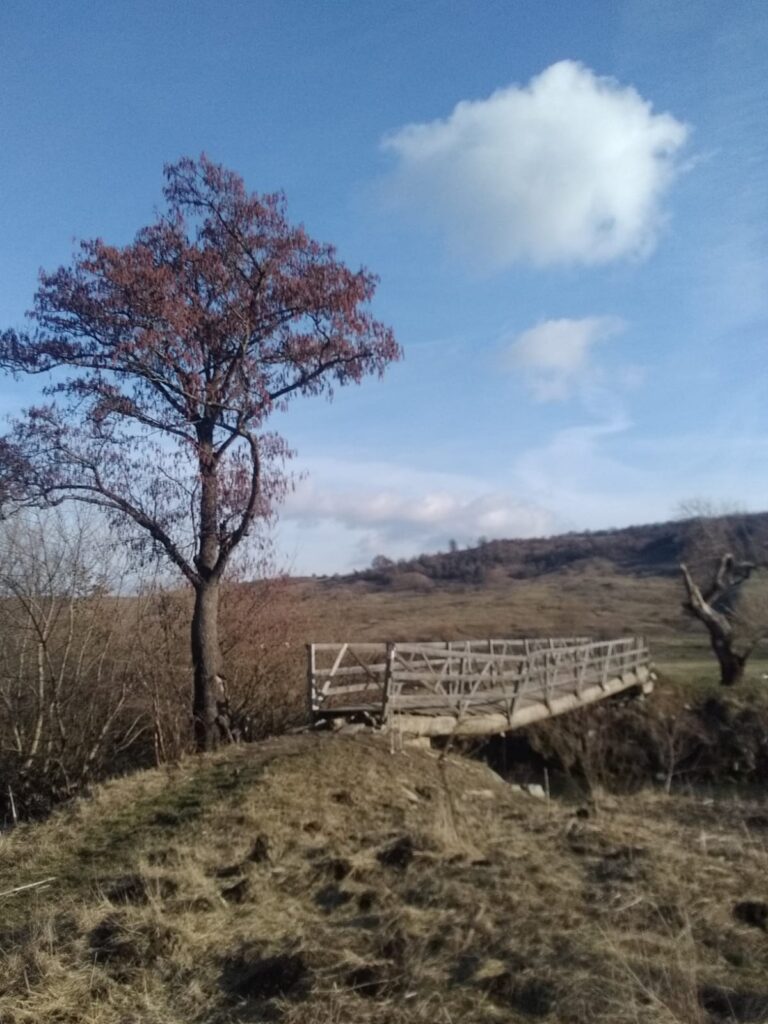
I’d follow a route I’d more or less worked out the evening before. Before falling asleep, I’d look at the map: tomorrow, there’s a mountain pass to cross, a forest to go through, a river, or a highway I’ll have to manage to cross.
I still don’t know how I’ll do it, but I look.
And what about eating, how did you manage?
Emmanuel
Either I had food in my bag, and so I ate what I was carrying.
Or I’d come across opportunities on the way: a restaurant, for example. Then I’d go eat something hot and cooked, because in the bag, most of the time, I ate raw things.
Or I’d meet people who invited me. And then I’d see how it went.
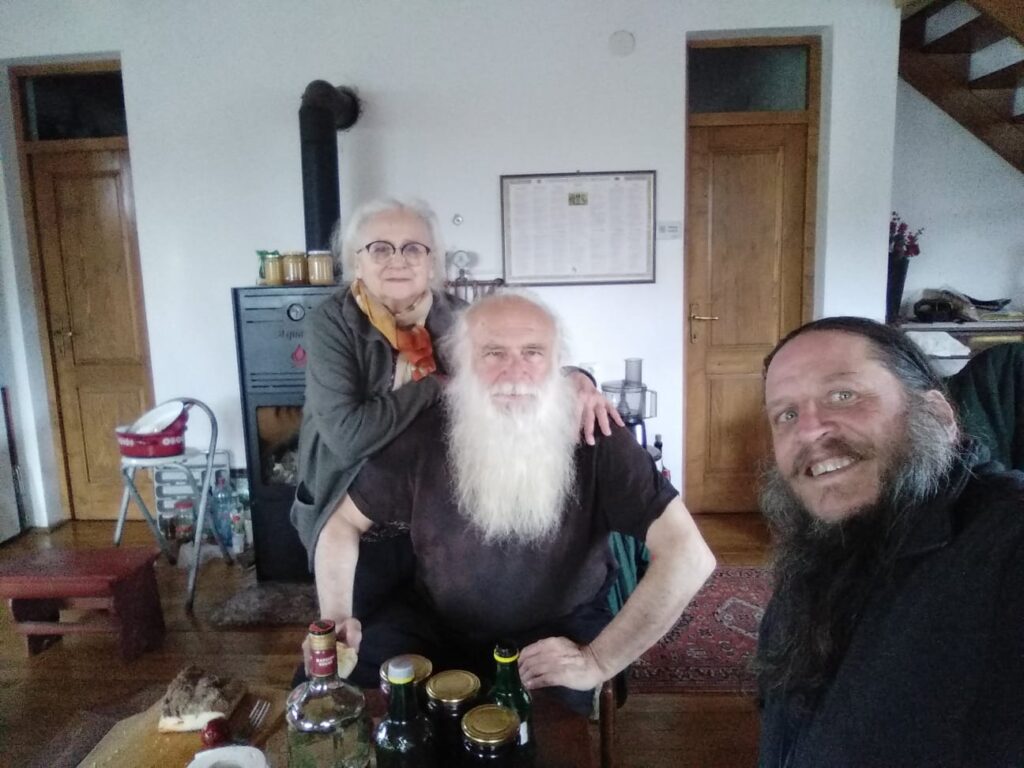
And sometimes it happened that I didn’t eat, fairly often. Because I had no more food in the bag, and I hadn’t come across a place to buy supplies or to eat.
In some areas, with a certain population density, you’re pretty much sure to find something. In other areas, with far fewer shops, it could happen at least one day a week without eating. And sometimes you go three or four days without eating.
There’s a calculation you make: either I take my time to get through what I’m crossing, and so I don’t eat. If the supplies I have will last two more days, but I take five days to cross a mountain range, that means I won’t eat for three days.
Or I hurry. I speed up the pace, I walk more, and that becomes an effort. Instead of crossing in five days, I cross in three, and I only miss one day of eating.
There were times when I was somewhere with nothing left to eat, even at one point nothing left to drink — and I told myself: whatever, I’m staying anyway, it’s too beautiful here.
When you’re on the road and you can’t eat, that’s part of the road.
There’s something you need to see as a pilgrim: everything that happens to you, if you take it badly, you’ll be miserable.
People say: “You’re so brave, walking through wind, rain, snow.”
But if you’ve decided that walking in the rain is a bad thing, you’re going to have a bad day. If you’ve decided that snow is a problem, you’re going to hate it.
If you’ve decided it isn’t a problem — it’s raining. There. It’s raining.
You have nothing to eat? You don’t eat.
But if you interpret it as something negative, you’ll carry your hunger the whole way. It’ll become unbearable.
It’s something you’re forced to learn as a pilgrim. I love pilgrimage for that. It teaches you… The road… I say it’s the road that teaches you… And it does it gently.
You often say the road teaches. What does it teach first?
Emmanuel
It teaches you to let go. To give things up.
At first, it’s very concrete. It’s the backpack.
When you set off into the Himalayas, for example in Nepal, you bring a lot of stuff telling yourself: “I’ll need that. That too. That too.”
And then when you’re in the mountains, when it’s climbing, when everything hurts because your bag is too heavy, you go back through your bag. You tell yourself: “That’s not so essential. Neither is that.”
You experience it very clearly in a pilgrimage, because you have the backpack all the time. It’s always with you.
You put lots of things in it telling yourself it’d come in handy, that you’d need it. And by carrying it, because it’s heavy and it becomes a burden, you realize you don’t. You’ll do without.
It’s not painful to give it up. It’s you telling yourself: “No, I don’t need this.”
So it’s not hard. You end up with only what’s truly essential. Well, what you believe is essential at that moment.
Me, for example, I gave up the stove.
I had one, even several times. But I gave it up. So no coffee in the morning. No broth in the evening. I ate cold.
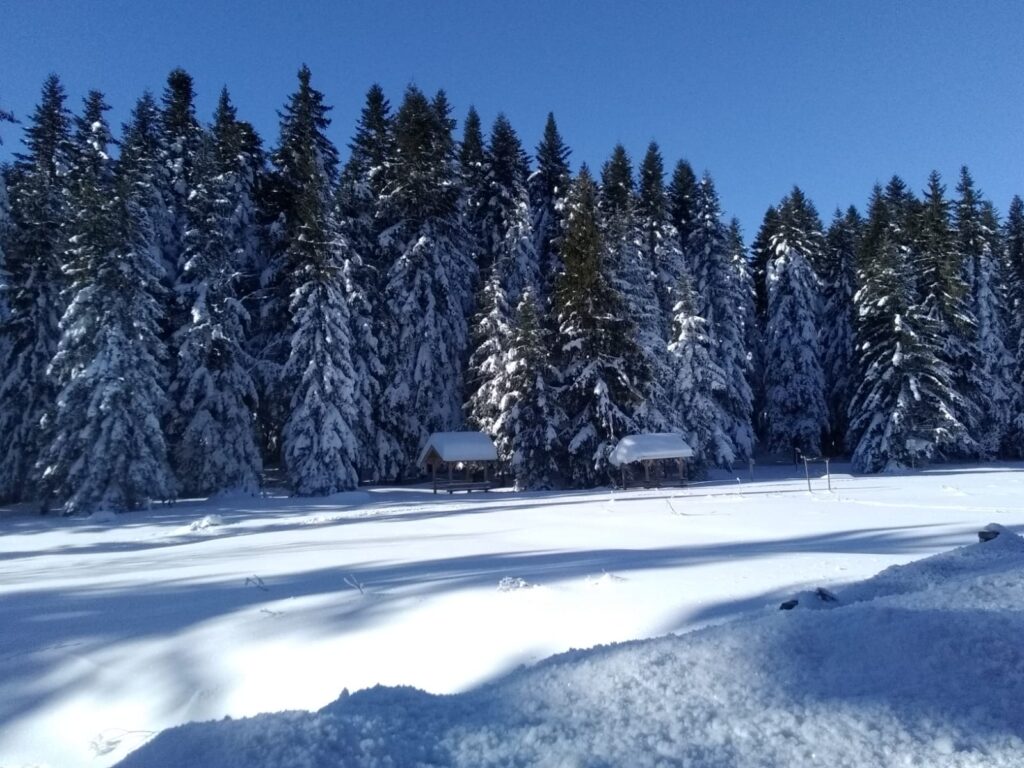
I picked one up again at one point, because the winter was harsh. It was minus 28°C outside, minus 25°C in the tent. Everything was frozen. I slept with my water bottles in my sleeping bag to keep them from freezing.
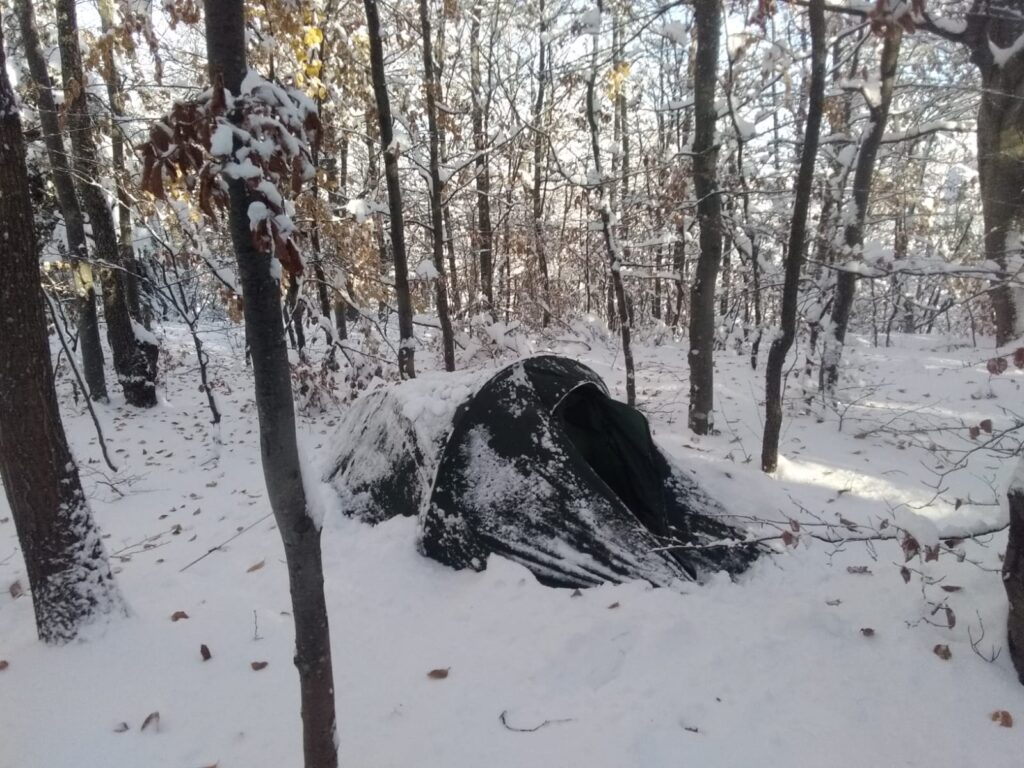
Heating a bottle in the evening, and slipping it warm into the sleeping bag when it’s minus 25°C, is comfortable. It works as a hot water bottle.
But I ended up stopping again.
It’s not worth the weight you carry, or the difficulty of finding fuel or restocking it. Carrying the stove and finding fuel becomes heavier than eating cold.
So I stopped.
On the other hand, it happened that I made emergency fires. You clear the snow down to the ground, you make a fire, you melt snow, you fill your bottles, you heat them to carry inside your jacket, and you set off again.
It kills a walking day, because it takes three or four hours just to boil two liters of water. But that only happens two or three times a year. Would you carry a stove all year for that? No.
And there, you realize something: you fill your backpack with your fears, especially your fears of scarcity.
The road first teaches you to let go of the things you thought were essential. Then afterward, you give up other things.
You give up your fears.
Because in fact, the things in your backpack are fears.
The fear of not finding food. The fear of not finding water. The fear of not finding somewhere to sleep.
All of that, you’re forced to give up. But you give it up very naturally, very gently. It’s not violent. You don’t hurt yourself.
You simply tell yourself: “No, I’ll do without.”
What did people give you along the way?
Emmanuel
Lots of things. Really lots of things. And I found that deeply touching.
Sometimes I’d arrive in a village and look for a coffee. I’d go into a bar. People would ask me who I was, what I was doing.
And it happened many times that a guy would step out, go home, and come back with a bag of food. Really. The guy comes back with five kilos of supplies for me.
All the people with gardens, when I passed by, it was the same. In Eastern European countries, people gave me cucumbers, tomatoes from the garden. People emptied their fridge for me. People had cooked something and gave me part of it. Or invited me to eat.
Other than that, I found a lot of pleasure in gathering what I could gather: hazelnuts, walnuts, chestnuts, apples, blackberries, blueberries.
I stuffed myself with blueberries while walking. In the woods, there were carpets of blueberries. My trouser legs were blue. You’d go along the little trails made by wildlife, blueberries sticking out, rubbing against your trousers.
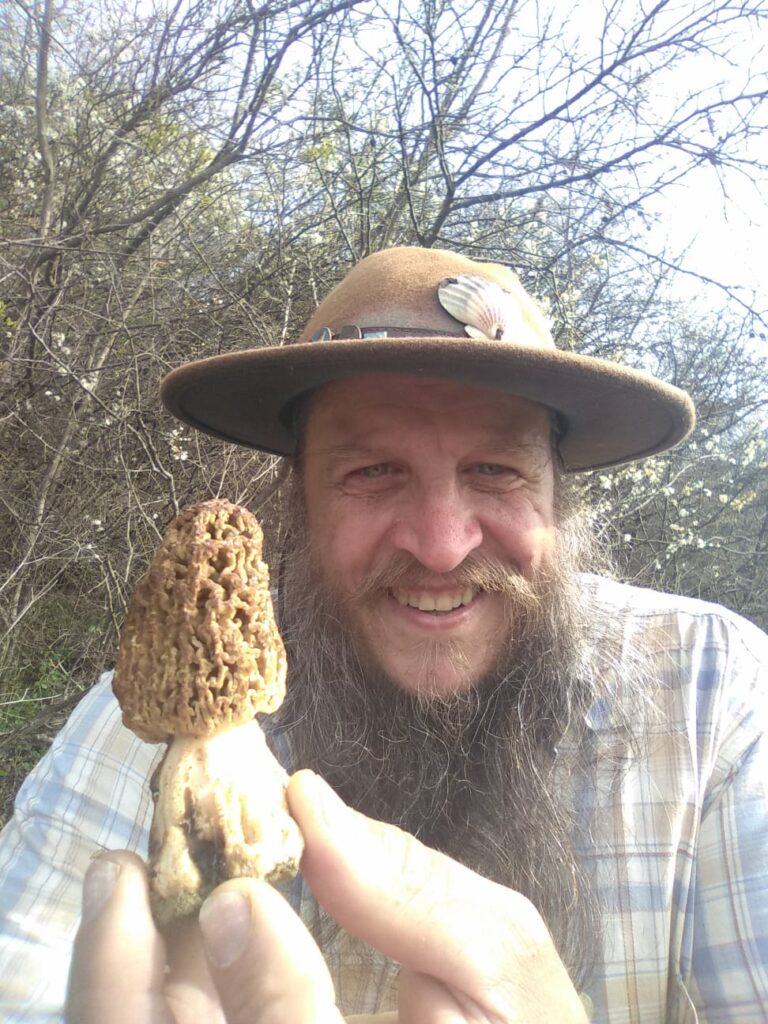
I also ate mushrooms, dandelion greens. It was really hard to get salad while walking, so I’d take dandelion. When I was in the tent, I often ate bread, tomatoes, cheese. And sometimes I’d put dandelion leaves in my sandwich.
But what touched me the most was the giving.
The gift of generosity. And the gift of trust.
Almost all my encounters carried that.
As a pilgrim, I answered it with the gift of myself. What I could give was my presence, my time, my sincerity, my listening, and answers to the questions people asked me.
One of my rules was to always take the time to answer everything that could be answered. To make it a real exchange. An exchange where I was truly available to the person.
And the gift of generosity, it’s enormous.
There were people who gave me not much, but it was an immense gift. Because they didn’t have much themselves. Even if in concrete terms it wasn’t worth a lot of money, the gift was enormous.
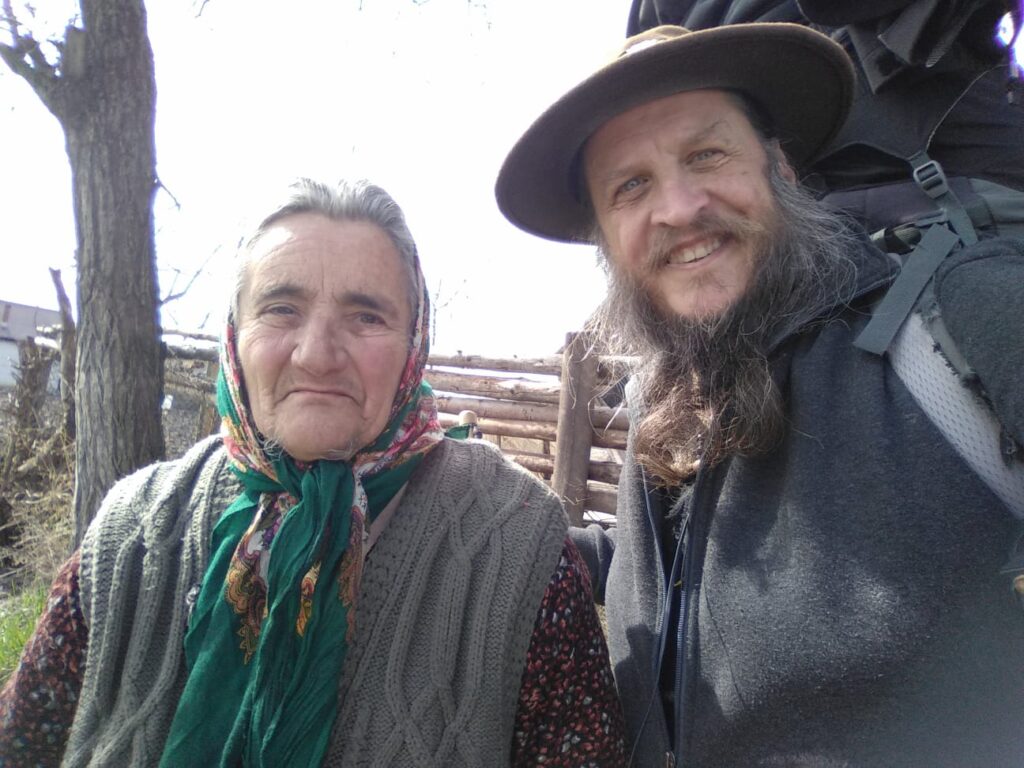
At some point, you stop really paying attention to the object you’re given, and instead pay attention to the intention or the gesture of the person giving it.
And there, some gifts carry a magnificent generosity.
There’s also the gift of trust. People who invited me into their homes, even though I didn’t look like much. I had my backpack, sometimes I was dirty because I hadn’t been able to wash my clothes for a week while crossing a mountain.
I’d arrive in a village, and people would welcome me into their homes. They’d offer me the chance to wash up.
And that’s an absolute rule: if someone offers you a shower, you say yes. Always. You don’t think about it. Even before the person’s finished asking.😂
It feels really good to receive generosity. It feels really good to receive trust.
You feel indebted when you receive trust. You never want to betray that trust.
Receiving tomatoes or cucumbers from the garden is easy. Someone hands you a bag over the fence, you say thanks, you accept.
But someone handing you bills, for me, that was hard. At first, I refused.
And then I understood that refusing hurts the other person.
Because a lot of people also gave to be part of what I was doing. They wanted to be involved. And their way of being involved was to help me.
Sometimes someone couldn’t help me any other way, so they gave me money. And accepting was hard. But at some point, I told myself: if you refuse what you’re given, how can anyone give to you?
You need money. If you don’t have any and people give you some, you can’t complain about not having any.
But with money, I often struggled. I refused more often than I accepted.
Afterward, it always depends on the person giving. Some people give with their hand above yours. The ego doesn’t like that much.
But some people offer with real momentum. You can’t say no. Even if it bothers you to receive money, you accept because for the giver, it matters.
From the outside, what sets you apart from a vagrant or a homeless man?
Emmanuel
Not much. From the outside, not much.
There are still a few things.
First, my backpack is impressive because it’s big. I’m making an effort that isn’t trivial, and people see it. If you carry that for miles, if you get through certain hardships, people sense there’s something else behind it.
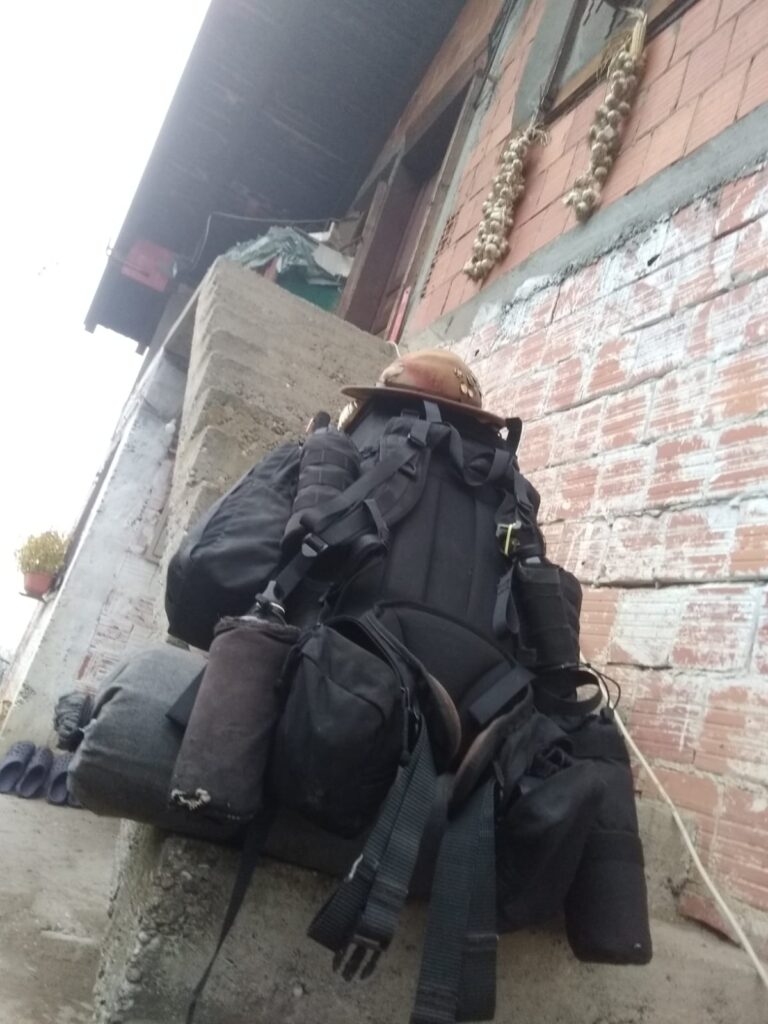
Then, I have the pilgrim’s symbols. But they’re symbols that are necessary, that’s why they’ve become symbols.
A pilgrim setting off for a long time needs a staff.
And not telescopic poles. No, seriously — I see people walking with things that cost 280 euros, with suspension, micro-springs, wind-tunnel tested by NASA engineers, to gain 0.00003 km/h over the distance.
I burst out laughing. He looked at me without blinking.
Me, I take hazel wood staffs.
I like hazel because you often find long, straight switches. About every 1,500 km, I change my staff, because it wears down along the way. But it’s free. And it’s very good, my staff.
After a while, you have a relationship with your staff. It’s funny. It’s essential.
I also have a wide-brimmed hat. It protects me from the sun, from the rain. That way, the rain doesn’t drip onto my face while I walk. It drips down my neck. That’s better 🤣🤣🤣
And on my bag, I have the scallop shell.
All over Europe, people who know it directly associate the scallop shell with pilgrimage. I put it there so there’d be no ambiguity. When people see me, they don’t necessarily think “a tourist,” “a trekker,” “a vagrant.” Those who know say to themselves: “Ah, a pilgrim.”
I also have pins and medals sewn onto my hat. People gave them to me at certain pilgrimage sites. And I wear some on my backpack too. They’re the destinations I’ve been to.
People notice that too. And it opens the conversation.
Did you often sleep in monasteries or religious places?
Emmanuel
Very often. Even though it depends on the periods and countries.
But I didn’t like asking for hospitality. It happened, of course, but it wasn’t what I preferred.
One of my rules was that every time I could go into a church, I’d go in to recite prayers or meditate. That was part of the spiritual practices I did as a pilgrim.
And if you go into a church that belongs to a monastery, there’s a good chance you’ll meet a brother or sister. Conversation starts. People ask what you’re doing there, because you don’t go unnoticed.
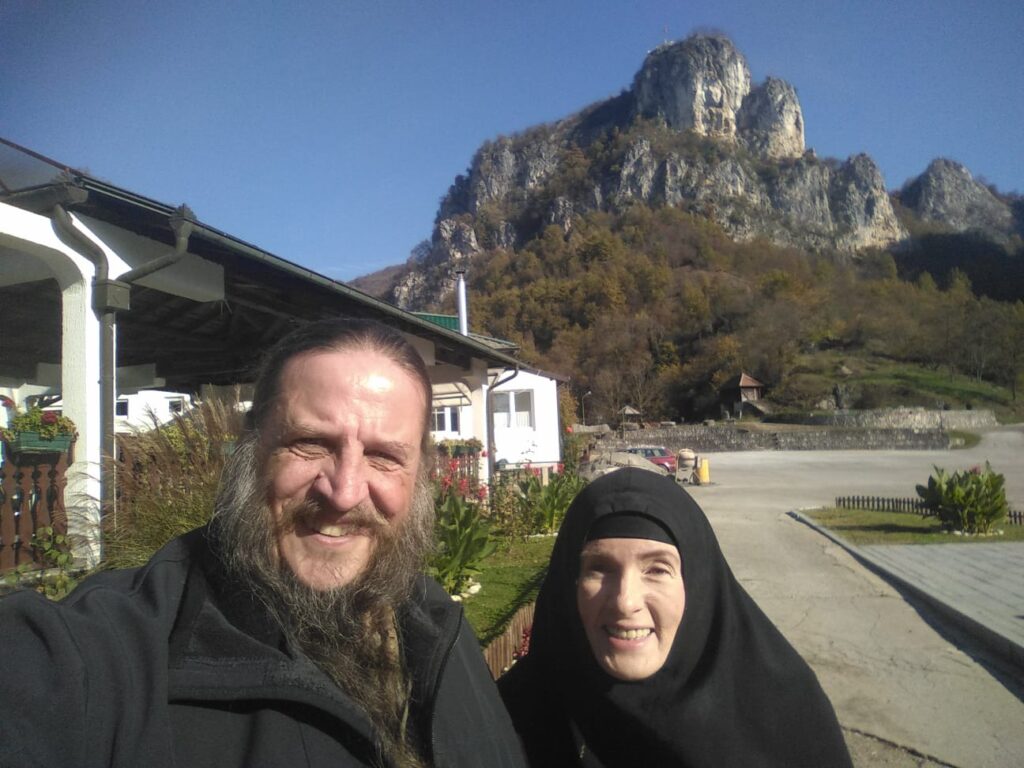
And maybe also because there’s no more ambiguity at that point. I really am a pilgrim, since I’m engaged in a practice. It shows.
If you stay three hours focused on meditating or reciting, people think you’re fairly serious about your practice.
And often, that led to an invitation: “Stay with us tonight if you like”, or “Do you have somewhere to sleep?”
I took what came my way.
What do people imagine is the hardest part of your journey?
Emmanuel
There are several things. It’s hard to rank them by importance.
There’s the solitude. Lots of people say: “You’ve been alone for five years.”
And there’s the harshness of the elements. Because as a pilgrim, you’re exposed all the time.
But when you’re a pilgrim, you realize something: you’re forced to take everything that happens to you well. Because if you take it badly, it becomes hell. And if it becomes hell, you stop your pilgrimage.
In an ordinary life, you can take a lot of things badly and still carry on. On a pilgrimage, if you take what happens badly, it becomes much harder. You have no roof, you’re exposed, you’re at the mercy of a lot of things.
So it’s a necessity to take things well.
People are used to taking good things well and bad things badly. But that’s a mistake.
As a pilgrim, I tried to take everything well. And so, you become happy. It’s strange.
I realized that happiness is like freedom. It’s not something you find, it’s not something you’re given. It’s something you learn.
You learn to be happy. You learn to be free.
People say: “You’ve been walking for five years, that must be really hard.”
And no. It was really good. It was really beautiful. I didn’t want to stop.
Is the road an anchor in life for you?
Emmanuel
The road isn’t an anchor. The road is a teacher.
It’s the one who teaches you. It’s a teacher.
By parting with everything you can part with to travel lighter, at first it’s the objects in the bag. But afterward, it’s the backpack you carry in your head that empties out.
When you walk, you have time to empty things out in your head.
Silence lets you observe better. Yourself and what surrounds you.
Observing calms you. And it anchors you.
Does this really make you freer, or does it just shift the constraints elsewhere?
Emmanuel
I’d say you’re a lot freer because you’ve learned to be free.
You have to learn to be free. Otherwise, you can’t do it.
Freedom is something you learn.
You can’t find freedom. It doesn’t exist. Freedom isn’t the absence of constraints. It isn’t the absence of rules.
I think there are people who are in prison — a real prison, or a social, family, or relational prison — because they never learned to be free.
And you can be deprived of freedom and yet be free.
You can have all the freedom you want and yet be a prisoner.
Yes, there’s a shift of constraints. But I think it’s a shift of constraints that frees you.
It’s the attitude that is the source of freedom. Not outer circumstances.
Freedom is our natural state. To live it, maybe you don’t need to find it. Maybe you need to find it again. Recognize it. Or give up the things that keep us from seeing we already are free.
Today, you’ve paused your pilgrimage. How are you experiencing that?
Emmanuel
When you go on a long pilgrimage, you realize the pilgrimage is a hyperbole of life.
Being a pilgrim is living.
We’re all pilgrims, we just don’t necessarily know it.
Today, I still feel like I’m on a pilgrimage, even though I’m no longer walking. I’m settled, I work, I look for work, and when I find some, I do it.
But the attitude I had on the road is still there.
I walked for 5 and a half years. I covered ten-thousand-something kilometers on foot. I’d like to do even more.
I wonder what I could discover if, instead of walking for 5 and a half years, I walked for 12 years. With constant practices. What state of consciousness could I reach that way?
Pilgrimage becomes a tool. A tool for discovering, and for getting rid of the things you’d like to get rid of.
A concrete benchmark: how much does a life like this cost?
Emmanuel
Roughly, I spent between 500 and 600 euros a month. All included, with a bit of gear.
To fund that, I work. I take contracts, temp jobs, save up a bit of money, and then set off again.
And I play the lottery, but it’s never worked. 😃
What I take away from this meeting
What I take away from this conversation isn’t a method.
You don’t have to walk for 5 and a half years, sleep in a tent, eat cold food, or cross Europe with a hazel staff to understand something about freedom.
This is Emmanuel’s path. A very particular, demanding, inhabited path, which belongs entirely to him.
But there’s something in his words that’s hard to get around: some lessons don’t come only through ideas. They come through the body, through duration, through real constraints, through the days when nothing goes as planned — and where you discover, to your own surprise, that it’s fine anyway.
What struck me in this conversation was less the feat than the logic running through it. A simple logic, almost obvious once he puts it into words: freedom is something you learn — by gently giving up what isn’t essential, and appreciating what is here, in the present.
First the objects. Then the fears. Then the expectations about how things should go.
The shape this search takes is unique to each person. For Emmanuel, it took the shape of a pilgrimage. For others, it will be a departure, a pause, a change of pace, a different way of inhabiting their days and their thoughts.
Everyone finds that path at their own scale.
To discover Emmanuel’s world:
➡️ Emmanuel, French Pilgrim
Leave a Reply